That we are heading into, or are already well inside, Earth’s Sixth Great Extinction is probably not news to readers of this blog. It’s sadly certain. I had considered focusing a Lent reflection on extinction of species sometime in the future. In the three-year liturgical timetable that my reflections follow, Lent 2015 would be Air’s turn. I figured I could update Lent 2012 for use in 2015 and think about species for another time.
 However, people in various groups that had used Air in 2012 asked what else I would offer. I decided to let the Scripture reading make the decision. Turns out that next Lent’s First Sunday readings include God’s covenant with all creation. That settled it, and I started writing.
Lent 2015
As usual, I began with our place in the Universe Story, the sacredness of all life, our interconnectedness and interdependence. I continued with information about species: numbers suffering extinctions and threats, causes and solutions. I included prayers of grieving and actions to continue efforts to improve present reality. I recommended videos of fish, birds, and mammals, plus heroes who worked to save them.
I finished Creation Covenant: Reflections on Fish, Birds, and Mammals for Lent 2015. My various proofers did their thing —bless them and their giftedness! — but I had a nagging feeling that I’d missed something.
Well, I found it, and I think it’s worth a blog.
Endangered Species Act
My Aha! came when I read key parts of the 1993 Endangered Species Act (ESA).  You might be surprised to know that the act’s first purpose is not to save species! That goal follows from the first:
“The purposes of this Act are to provide a means whereby the ecosystems upon which endangered species and threatened species depend may be conserved, [italics mine], to provide a program for the conservation of such endangered species and threatened species, and to take such steps as may be appropriate to achieve the purposes of the treaties and conventions set forth in subsection (a) of this section.”
Ecosystems
The ESA’s authors realized that the primary way to preserve species is to conserve their habitats: the complex of climate, food resources and multiple species that evolved interdependently over millions of years in each of the various bioregions of Earth.
Planet Earth is itself one inclusive ecosystem of which the human species is a part. Our species is totally dependent upon the rest. If we destroy our habitat, where can we go to survive?
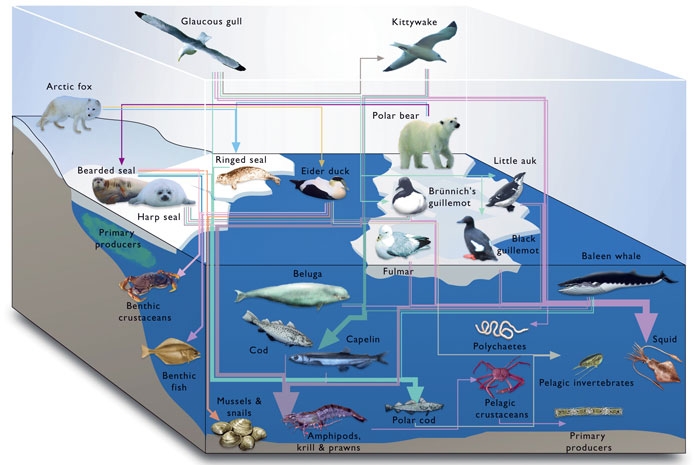 We’ve all heard about the butterfly wings flapping in one place that cause weather changes someplace else. Ecosystems affect one another. That level of interactivity cannot easily be visualized. Nor can we see essential components of local ecosystems in a photo or watch the slow evolution happening even as an image is taken.
We cannot see a species’ preferred climate, its predators or what it consumes to keep the ecosystem in balance. We cannot see soil quality or water salinity, all the other living organisms, and the chemical and other factors that have developed together to provide a home in which the various species can thrive. It’s the whole that needs primary care. God’s covenant was not with species, but with creation.
Habitat Loss
Yet I, and many others, have been focusing on species. Images of a given endangered species — like the polar bear here — 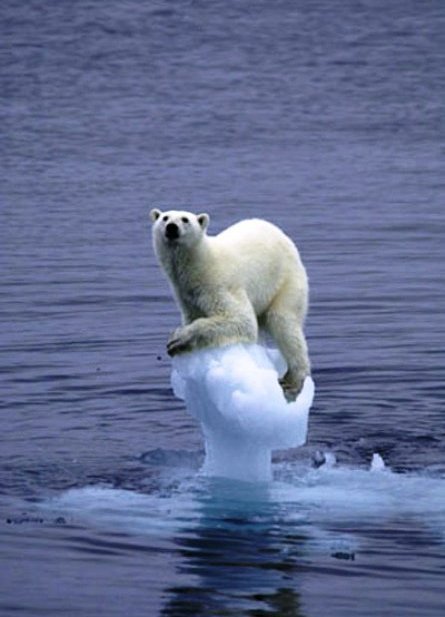 immediately reach open hearts. We can relate to a given fish, bird, animal, plant. It’s way harder to image an ecosystem. Might seem like the chicken and egg question, but the ESA — and logic, after some reflection — is clear: start with the ecosystem. That change in attitude is now required.
Scientists agree that habitat loss is the greatest cause of extinctions. The Endangered Species Act confirms that conserving specific habitats is the primary issue needed to save species. Save the ecosystem, and we save everything living within it and dependent upon it. As Thomas Berry often repeated, “Nothing is itself without everything else.” (True for humans, too.)
Attitude (and Punctuation) Shift
This highlights an evolution needed in our brains. We’ve evolved in recent centuries to think of ourselves and items in the rest of nature as individuals. This awareness was important, a beginning, but now it’s time to become more aware of how these individuals inter-exist. (C.f., https://ecospiritualityresources.com/2013/10/20/stages-of-cosmic-consciousness/.) The pyramid structure — God on top, then men, then women, etc. down the line — didn’t include a spot for ecosystems, and we are now challenged not just to include ecosystems, but to place everything– including ourselves — within that context. That’s reality! We rarely perceive the interaction in an ecosystem, but that’s a skill every human needs to develop.
So I shall revise Lent 2015. One example: I had written “The reasons for species extinctions include these: habitat loss, global warming, pollution, deforestation, land development, habitat fragmentation . . . .”
I’ll make this change: “The primary reason for species extinction is alteration of ecosystems. [full stop] This happens through climate change, pollution, deforestation, land development, habitat fragmentation . . . . .”
Local Ecosystems
Brian Swimme, in The Hidden Heart of the Cosmos (1996) invites readers to take the “local universe test”: imagine inviting someone “to visit you who lives at least twenty miles away and who has never visited you before . . . . In your directions you  may refer to anything but human artifice . . . hills, trees, constellations of the night sky, the lakes or ocean shores or caves, . . . any ponds, trails or prairies, the Sun and Moon . . . .” and so on. But nothing human-made.
What trees, flowers, and birds are native to your area, having evolved over centuries? Where does the water come from and go to? Is anything endangered for any reason? What do you know about the millions-of-years evolution of your area? How does it change with the seasons? Have you had, or can you imagine others having had, awe-inspiring experiences here?
Perhaps if we were more conscious that we are co-creating our ecosystems, we would be more eager “to provide a means whereby the ecosystems upon which endangered species and threatened species depend may be conserved.” This awareness might also help us realize how the health of individual bioregions is essential to the health of the entire planet, our precious home. May we recognize its sacredness and respond to its needs.




 Gerald Schroeder, author of Genesis and the Big Bang, Science of God, and Hidden Face of God. Gerald was explaining why, if a tree fell in the forest, there would be no sound. The energy waves exist, but something or someone with the physical equipment to receive (capture) the waves is required to make noise possible. As would be expected considering the titles of his books, the interview continued with his insights about the big questions of personal consciousness, God, and death. But he had me with capturing sound.
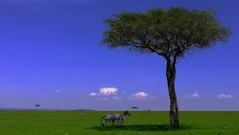 More recently I was rereading sections of Mary Jean Irion’s She-Fire, A Safari Into the Human Spirit. Her book has treasures of several types, and I always gain from perusing the many pages I have dog-eared. This time I stayed with her reflection on the blue sky she saw in Kenya. Mary Jean writes: Blue is not a thing in itself. It does not exist. It happens only in the relationship of matter, light, and cones in the eye. Take away dust in the air, or take away light, or take away eyes — and there is no color. Yet there it is: who cannot see it? The sky, so help me, is blue today. Like Gerald Schroeder, Mary Jean goes on to explore thoughts about God. But she had me at capturing blue.
 concerning our origin in the stars. Essentially connected are the stories of the prescient scientists who developed the tools that made possible these discoveries. Whereas the equipment to catch sound waves and to see color came without human help, learning about the stars required patient human perseverance. Thanks to these scientists, we can now “catch” information unknown and probably unguessed until our time.
 and the Law of Three will be challenging. Her description of the ternary principle and its applications to theology force a forging of new brain paths. Yet how worth the effort to follow her journey into a new model for God and its more spacious container for the rich mythological and personal language of traditional Christian understanding. Hinting at what’s coming, she says: . . . most of the paradigm distress besetting contemporary trinitarian theology has arisen out of trying to bottle into particle format what is intrinsically a wave. How shall we capture these depths?
 ecospirituality resources