Tag Archive | Laudato Si’

Sept. 1: World Day for Care of Creation 2019

Pope Francis has declared September 1, 2019,
World Day of Prayer for the Care of Creation

home-planet-earth-1-638

According to Pope Francis, “The annual World Day of Prayer for the Care of Creation offers to individual believers and to the community a precious opportunity to renew our personal participation in this vocation as custodians of creation ….”


Officially joining the Orthodox Church in this day of concern for creation, Pope Francis invites everyone — believers or not — to participate in both prayer and action. 

This World Day of Prayer also falls at the beginning of Creation Time, which runs from Sept. 1 until October 4, the feast of St Francis of Assisi. This is an ecumenical season dedicated to prayer for the protection of creation and the promotion of sustainable lifestyles.

“ ‘Let ours be a time remembered for the awakening of a new reverence for life, the firm resolve to achieve sustainability, the quickening of the struggle for justice and peace, and the joyful celebration of life.’ ” (Earth Charter, quoted in Laudato Si’ par. 207)

PRAYER

Many will use the following prayer, found in the Pope’s encyclical letter Laudato Si’

A Prayer for Our Earth (Laudato Si’ following par. 246)

All-powerful God, you are present in the whole universe and in the smallest of your creatures. You embrace with your tenderness all that exists. Pour out upon us the power of your love, that we may protect life and beauty. Fill us with peace, that we may live as brothers and sisters, harming no one. O God of the poor, help us to rescue the abandoned and forgotten of this earth, so precious in your eyes. Bring healing to our lives, that we may protect the world and not prey on it, that we may sow beauty, not pollution and destruction. Touch the hearts of those who look only for gain at the expense of the poor and the earth. Teach us to discover the worth of each thing, to be filled with awe and contemplation, to recognize that we are profoundly united with every creature as we journey towards your infinite light. We thank you for being with us each day. Encourage us, we pray, in our struggle for justice, love and peace. Amen.

ACTION

Possibilities of action for living simply and sustainably are endless, but the ones below make a major impact. These actions interconnect with others, especially care of water:

1. Contemplate creation’s beauty, mystery, and interconnections, and rejoice in the divine presence living and acting in our world.

2. Vote for candidates proven to care for all creation, to resolve conflicts nonviolently, to assist the poor, and to increase love on our planet.

3. Lobby legislators on issues of importance for people and planet, such as:
        invest in renewable energy; stop subsidies to fossil fuels
        increase negotiating skills; stop expansion of weapons systems
        reduce inequality
        foster organic agriculture; stop monocrops and toxic chemicals

contentItem-2452130-11505405-q3ef94out2r76-or4. Reduce extraction and use of fossil fuels:

        transition to renewable energy at home and work
        reduce use of plastic, especially plastic water bottles and plastic   bags
        reduce gasoline use by reducing car and plane trips and staying
                 below 60 on highways

5. Eat responsibly for the planet
        reduce factory-farmed meat consumption
        increase fair trade, organic, and local produce (and products)

6. Protect trees
        reduce paper use
        use 100% sustainable paper
        plant trees and/or support groups that do

switch-off-lights-fan-when-leaving-the-room-save-electricity7. Reduce use of electricity
        turn lights and fans off when not in use
        reduce use of a/c, dryer, iron

8. Reduce consumerism
        make do with what you have whenever possible
        share when possible
        buy recycled goods

World Refugees

UnknownI just returned from the Chicago Art Institute’s exhibition of Van Gogh’s three paintings of his bedroom in Arles. The display notes that he lived in 37 places during his 37 years of life, and how hungry he was for a secure place where he could “nest.” His relatively tiny bedroom was a treasure for him, and he painted it three times even though painting an empty bedroom seemed a very odd thing to do at the time.

I took the bus to and from the exhibit, driving along Lake Michigan a distance of about 7 miles. I didn’t attempt to count the huge apartment images-1complexes that lined my route nor estimate the population of each, but I pondered the fact that each occupant was unique, with his or her own name, history, loves and concerns. The number of these individuals is beyond my power of comprehension. Yet this 7 mile stretch is just one small section of Chicago, with its population of about 2.7 million people.

My point? I was connecting these experiences with the current reality of world refugees. I kept tying to imagine those buildings bombed out and all those people forced to seek shelter,  to discover a secure “nest” for themselves and their family. Each one craving a place to be dry and warm and fed, to start again, to live without fear, and to deal with the trauma they had each experienced — whether by war, oppression, or climate disruption. Each one aching for the treasured family, friends, and home, education, jobs, and yes, things, that they were forced to leave behind.

Multiply the population of Chicago about 19 times to reach the number of men, women and children  — more than half the total are children! — seeking shelter  in their own country or in refugee camps or trudging to wherever they might find welcome, risking (and often losing) their lives, hoping to finally reach safety and a room to call their own.

World Refugee Day, June 20

The United Nations’ World Refugee Day honors the courage, strength and determination of women, men and children who are forced to flee their homeland because of persecution, violence and climate change. (Climate change is not yet formally on the UN list, but it is responsible for increasing numbers of refugees.) Technically, “refugees” seek a secure home outside their own country; “internally displaced people” — IDP — seek security within it. Right now these two groups total nearly 60 million people. And remember: over half of them are children.

Laudato Si’ and Jubilee Year of Mercy

Two days before the annual remembrance of world refugees is the one-year anniversary of Pope Francis’ Laudato Si’ encyclical, in which he calls attention of all people (not just Catholics) to the plight of refugees. In addition, Pope Francis has named this the Jubilee Year of Mercy. The Pope urges Christians to reflect on the call — and abundant opportunity — to practice the Corporal Work of Mercy to “welcome the stranger.”

imagesThe Pope himself has taken this action. After appealing to “the parishes, religious communities, monasteries and sanctuaries in all of Europe to express the Gospel concretely by taking in a family of refugees,” Pope Francis visited the frontline of Europe’s migrant crisis at a camp in Lesbos, Greece, and returned to the Vatican with three astonished families of Syrian refugees.

While setting an example of immediate action, the Pope is equally concerned about the causes of the crisis. “These poor people are fleeing war, hunger, but that is the tip of the iceberg. Because underneath that is the cause, and the cause is a bad and unjust socio-economic system, in everything, in the world.” While welcoming the stranger has moral and religious foundations, integrating these refugees is also a smart move politically. The best way to avoid making an enemy is to make a friend.

Responses

9d18180b-8502-4d19-85fa-e8fbe98473a4My own parish, St. Gertrude in Chicago, collected resources for a Syrian family we planned to adopt. With the strong support of our pastor, Fr. Dominic Grassi, over 100 parishioners volunteered to help, and the entire parish contributed financially to provide rent and material needs. Before “our” family arrived, two local refugee families experienced emergencies that resulted in our using rent money for one of these families and using our housing and supplies for the other. We are again prepared to welcome the Syrian family as soon as one completes the long process of application and is granted asylum in the United States.

Adopting a family is both a challenging and a rewarding adventure. Some countries (like Jordan, with 21% of its population now refugees) have major problems with that influx. Other countries (like the United States, with a population of nearly 322 million) could almost certainly absorb more refugees.

But everyone can contribute to groups that help. And, like the Pope, we can all be concerned about the  violence, inequality, oppression and climate change causing the current exodus from so many countries. We can all vote for leaders committed to improving the world we share. We can all be attentive to make our culture welcoming and compassionate. Christians have the additional incentive that whatsoever we do to anyone, we do to Christ, but every religion has a version of the Golden Rule. How shall we practice it?

Mother’s Day 2016


UnknownMother Earth

I shall have to disappoint those who expect me to focus on Mother Earth when writing about Mother’s Day. Readers of this blog are aware of my commitment to Earth and my appreciation of our interconnectedness — even inter being — within creation. We know the harm that has resulted on our holy planet when she is unable to nurture life as a mother should. However, Mother Earth is not my focus here.

“Real” Mothers

Nor shall I highlight all physical and spiritual mothers — the ones who gave each of us flesh and blood, who experienced childbirth, who, in the best of circumstances, lived  and breathed for our benefit. These women gave us life and nurtured it, and I remember them with deep gratitude. (Mine was fittingly named “Grace”!) We couldn’t be here without them and their nourishment. But they, too, are not my primary topic here.

Beginnings

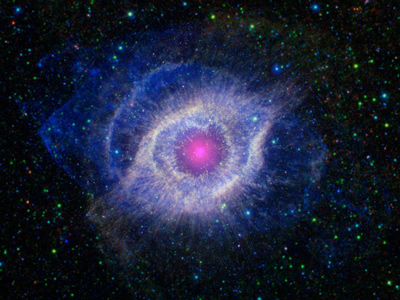
HelixNebula_WEBAs we approach Mother’s Day 2016, I choose to write about our celestial star mothers who, by their deaths, gave life to all creation: to galaxies of other stars, to the planets — including our own — and ultimately to every mother, of any species, who has ever existed on what we fondly term Mother Earth.

Writing about what happened in the depths of space and time when the first hydrogen clumps formed the first stars, Curt Stager writes: “When the megastars matured, senesced, and died, …  oxygen atoms blew off into space like pollen from bright, flaming flowers. To look into the night sky is to survey distant gardens in which the elements of life are ripening, and your body is a composite harvest from those cosmic fields. … We exist today only because our true celestial star mothers died long ago. ”  (Your Atomic Self: The Invisible Elements That Connect You to Everything Else in the Universe)

How awesome, if counterintuitive, to know that we – and everything on Earth — are actually composed of atoms that originated in generations of exploded stars. Everyone and everything “inherited” life from stardust (plus hydrogen and helium, the elements that predated stars). It’s challenging to believe that what looks like my solid body is really composed of atoms that are going “to, through, and from your body,” but it’s true. This can certainly be “downright mind-bending”! (ibid.)

Unknown-1

Middles

Can it be more than mind-bending? Does accepting our place in our evolutionary story make a difference? Many answers exist to this question, but I shall use one that I remember from a  lecture I heard decades ago. That it stuck in my memory is tribute to how deeply it impressed me. I recently saw it referred to in a book by Daniel C. Maguire. Commenting on 1 John: 3:2 (“What we shall be has not yet been disclosed.”) Maguire writes: “Biblical scholar Gerd Theissen … suggests we call off the search for the ‘missing link’ between apes and true humanity. Says Theissen, we are that missing link.”  (Italics mine)

Hope for the Future

I find that perspective both insightful and pregnant with hope. Our so-often misguided, selfish, and destructive selves are not the pinnacle of creation. We have much to learn, much to transform, much to become. We each inevitably contribute to the future of creation, and it can be for the better.

Throughout Laudato Si’, Pope Francis intersperses words of hope. A few examples:  “… we know that things can change” (par. 13); “Hope would have us recognize that there is always a way out, that we can always redirect our steps, that we can always do something to solve our problems.” (61); “An authentic humanity, calling for a new synthesis, seems to dwell in the midst of our technological culture, almost unnoticed, like a mist seeping gently beneath a closed door.” (112); “Human beings, while capable of the worst, are also capable of rising above themselves, choosing again what is good, and making a new start, despite their mental and social conditioning.” (205)

Perhaps remembering our roots in the stars this Mother’s Day and our place in our cosmos’ ongoing story will strengthen us to continue striving to give birth to an authentic humanity. Happy, hope-filled Mother’s Day!