RESPONDING TO CLIMATE CHANGE

RESPONDING TO THE INTERGOVERNMENTAL PANEL ON CLIMATE CHANGE’S REPORT (IPCC)

climatechange312way-bcbd4a49729066e8ac3f0fdfb4f9099b7ec9b826-s6-c30
Readers who believe that all of life is interconnected, and that God has been living and acting in planet Earth throughout its 4½-billion-year story, are highly motivated to respond to the March 31, 2014
Intergovernmental Panel on Climate Change (IPCC)’s Report by the
world’s international climate experts. (Summary Report: http://www.climatechange2013.org/images/report/WG1AR5_SPM_FINAL.pdf The Chinese proverb’s warning was never more needed: Unless we change our direction, we’ll end up where we’re going.

IPCC Report 

The peril is even more certain, and more frightening, than past IPCC assessments stated. The Summary begins starkly: Human interference with the climate system is occurring, and climate change poses risks for human and natural systems. Climate extremes are unequivocally caused by human activity. 

Risks, benefits, and outcomes of adaptation are predicted for the near-term and longer-term. Statements are labeled by authors’ confidence degree: very high, high, medium, or low.  The list of  very high confidence  risks is staggering. All risks, and solutions, involve emission levels. Greenhouse gas emissions will have to drop by 40-70% by 2050.

Earth has had 5 extinctions. None had human causation, obviously. No human should want to be responsible for #6 —  though many factors indicate we are already causing it. 

IPCC’s Reasons for Hope

But it is not too late to keep the global temperature at a manageable level — if the world embarks quickly on an intense effort over the next 15 years.
10-05-2012zClimate change can be addressed without affecting living standards, they report, and with only a tiny reduction in economic growth. The IPCC report concludes that diverting hundred of billions of dollars from fossil fuels into renewable energy and cutting energy waste would shave just 0.06% off expected annual economic growth rates of 1.3%-3%. This investment would save the billions needed to repair losses from extreme climate events. 

In addition, it would prevent deaths and destruction from future weather extremes. It would provide   global economic opportunity we can seize today,  Sec. of State John Kerry said. So many of the technologies that will help us fight climate change are far cheaper, more readily available, and better performing than they were when the last IPCC assessment was released less than a decade ago, Kerry said. And cleaner air and fewer climate calamities would have positive effects for, e.g., health, job creation, and food production.

The report is clear: the more you wait, the more it will cost [and] the more difficult it will become,  said EU commissioner Connie Hedegaard. 

What’s Needed?

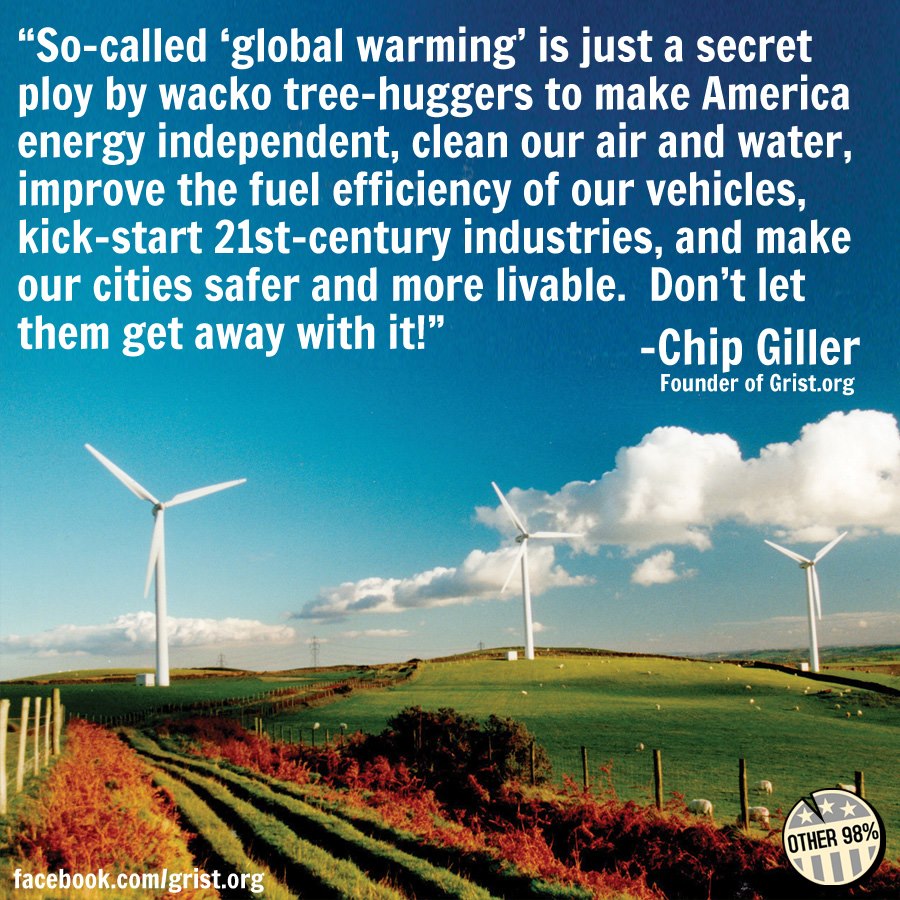
Rapid action can limit global warming to 2˚C, the internationally agreed safe limit, if low-carbon energy triples or opportunity-costquadruples by 2050. Companies and individuals must rapidly wean themselves off coal, gas and oil and fund low-carbon growth in poorer countries. Along with measures that cut energy waste, renewable energy – such as wind, hydropower and solar – is viewed most favorably by the report as a result of its falling costs and large-scale deployment in recent years.

Readers already committed to reducing fossil fuel emissions that exacerbate climate change are often puzzled by climate deniers and those who continue to spew greenhouse gases that clog our atmosphere. Will this report wake us all up to the immanent danger and changes that must be made immediately?

Action Suggestions

Here are some of many actions that can be taken to change attitudes and atmosphere. Trust that still, small voice that says: This might work and I’ll try it.  (Diane Mariechild)


– Appreciate the gift of creation and the billions of years of evolution. Don’t do anything, just stand there! (David S. Toolan, SJ) Fall in love with creation! Be awed by what has evolved and what we and future generations could lose.

– Imagine/ Vision: How old will your children/ grandchildren be in 2029? Picture the planet you want them to enjoy. We cannot choose whether or not to create the future; we can only choose whether or not to create the future we want for them.

– What would you say to parents who continued to give their children food that already makes them sick and that 97% of reputable food experts judge to be toxic? What could you say to climate deniers you know?

– Be able to explain the climate change/fracking connections (e.g. https://ecospiritualityresources.com/media; Triple Divide, from Public Herald; Gaslands 2).

– Deepen empathy for those who have invested in land and machinery, lobbying and media ads  for mining fossil fuels. It won’t be easy for them to change. Send strong, loving energy to support their, and its, “conversion.” Pray for Mother Earth’s healing.

– Lobby and join groups acting to reduce use of fossil fuels (coal, oil, gas) locally and nationally (e.g., 350.org, various frack-free and Keystone XL organizations).

– Transition to renewable energy sources for home and business (e.g., Credo: You can switch right now to 100% clean energy from Ethical Electric, America’s Progressive Energy Company.)

– Support expansion of renewable energy locally and nationally.

– Lobby for reduction of military budgets and for applying those massive sums for renewable energy. (According to TIME, April 28, 2014, the U.S. defense spending totals $640 billion, $452 billion more than #2 defense spender, China.)

– Encourage institutions to divest from fossil fuels and invest in renewables. (Archbishop  Desmond Tutu advocates an anti-apartheid-type campaign against fossil-fuel companies, which he blames for the  injustice  of climate change.)

– Reduce driving, but if necessary, drive no faster than 55 – 60 MPH. This results in notable reduction of fuel and of pollution — and it saves money at the pump.


All ministry will be futile if — through our ignorance, indifference, or refusal to act — Earth’s ecosystems are destroyed. Nobody makes a greater mistake than those who do nothing because they could only do a little!

images-2


EASTER AND EARTH DAY: life-death-life

DID NOT THE CHRIST HAVE TO DIE?  

(Luke 24:26)

Lent is transitioning injesus-christ-ressurected-115to Holy Week and Easter — with Earth Day very soon thereafter —    images
a good time to reflect on death and new life within the context of the new creation story. The chaos and seeming hopelessness of Good Friday, and the bitter cold and icy winter many have experienced, will both result in new life. It’s a cosmic pattern.

Cosmic Beginnings

When we think of Jesus’ death bringing him and us all new life, we can remember that the beginning of this death-to-life paradox can be traced back far beyond Scripture. When we start in the very beginning  — “a very good place to start,” as Julie Andrews reminded us —  we arrive at the Flaring images-1Forth (recently confirmed by John Kovac and his colleagues at the South Pole) and the subsequent formation and deaths of stars. It would have seemed unlikely that anything of substance would result from dying stars, but we know that by dying, each generation of them created more complex elements for new worlds and complex life.

Evolution continued for 13.8 billion years, always by way of some beings giving up their independent existence to create something new. Over billions of years, elements became molecules that bonded in ever more complex patterns. Major extinctions on Earth gave space
for new life forms. Created in God’s image, all of nature incarnates God’s generous. lavish, immense pouring out. Dying to live, living to die is an old, old pattern.

Plants and People

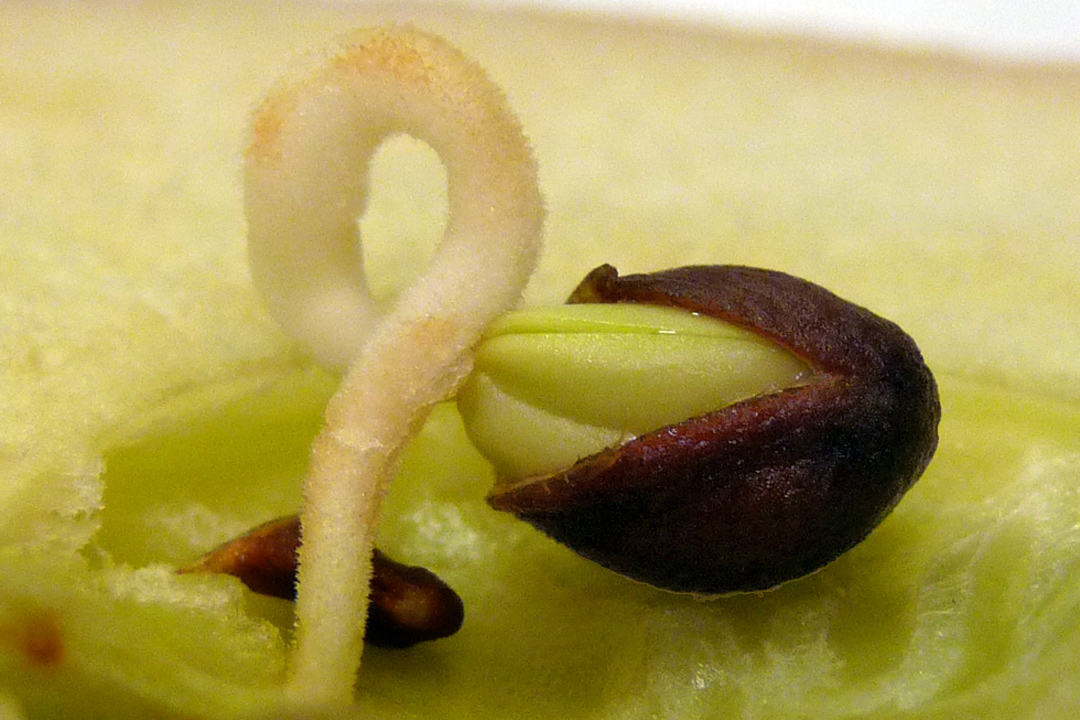
dying-seed1Death for life is obvious in plant life: Unless the grain of wheat dies, it remains just a single grain. But if it does die, it will bear much fruit (John 12:24). For a beautiful piece on regeneration of trees by coppicing (a special pruning and cutting technique that dates to the Neolithic period and that allows for continual, healthy wood harvesting from the same trees, often for centuries) see http://ncronline.org/node/73506.

In human growth and development, infancy gives way to adolescence get-attachment.aspxthat gives way to adulthood. Each moment cells die to give space/opportunity for others. David S. Toolan, SJ, writes: We regrow our entire physical body as we do hair and nails. Nothing in our genes was present a year ago. The tissue of our stomach renews itself weekly, the skin is shed monthly, and the liver regenerates every six weeks. Every moment, a portion of the body’s 10[28] atoms is returning to the world outside, and ninety-eight percent of them are replaced annually. It’s automatic!

Chosen deaths

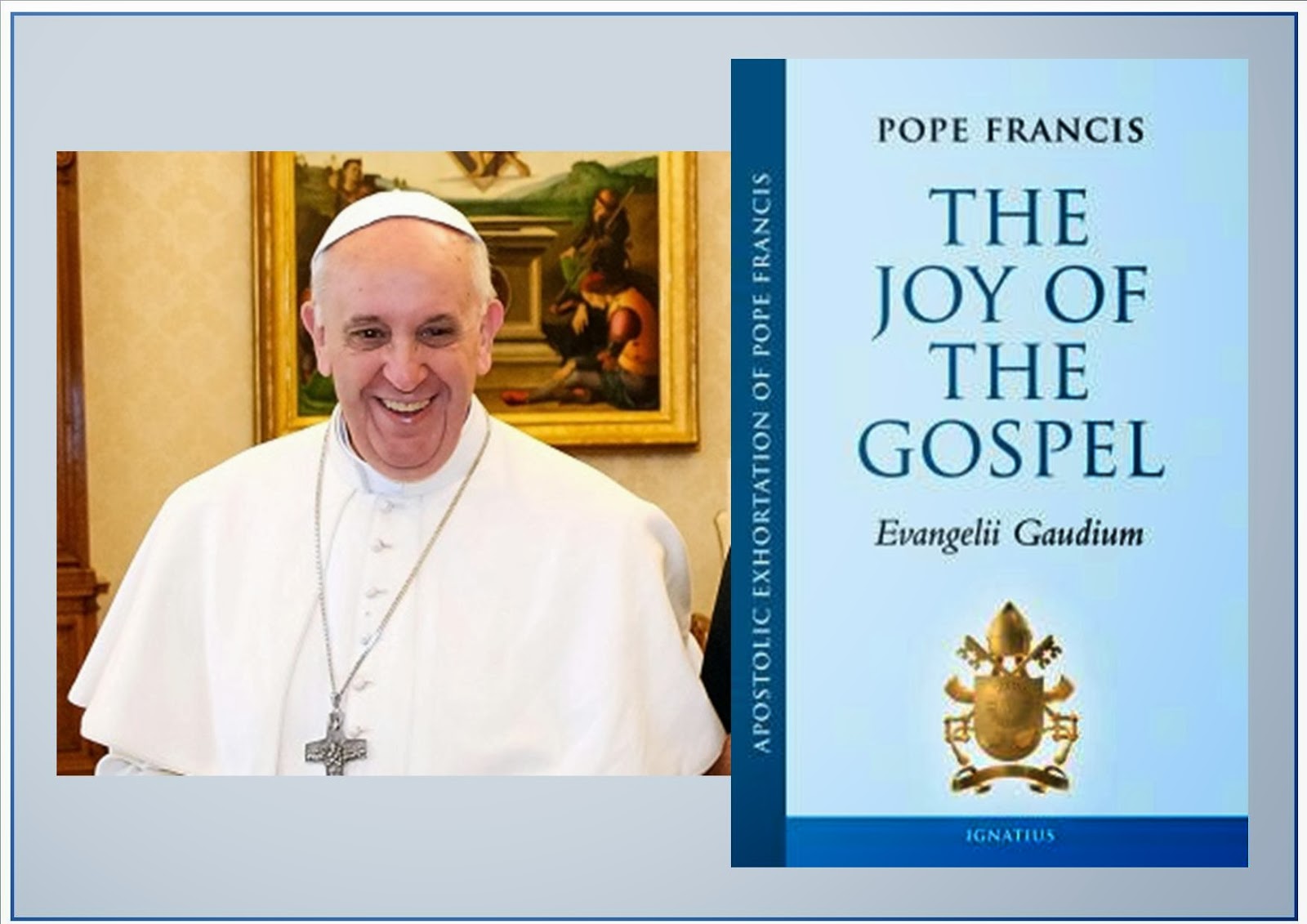
These automatic deaths, of course, were also true for Jesus. But Jesus gave us the ultimate example of chosen self-giving throughout his life.  Jesus’ sacrifice on the cross is nothing else Evangelii-Gaudium-Imagethan the culmination of the way he lived his entire life, Pope Francis reminds us in The Joy of the Gospel. Jesus’ total self-giving so that we might have new life confirmed his participation in the fabric of creation.

Jesus modeled for us how to live lovingly and selflessly for the good of others — with both love and justice. His life and death were obviously unique, but, like him, we who follow his life pattern have both automatic and chosen deaths.

Our Turn

We try to make the conscious deaths with love and joy, no longer, as in the past, for our small selves, for our small family, our small country; but for the salvation and the success of the universe. (Teilhard de Chardin) Aware of our interconnection with all being, we “die” to what we judge holds us (personally and globally) from abundant life – usually selfishness in some form. We can be confident that the Spirit of Life can bring new life both within and without us and all creation. We can be sure that our efforts for justice will bear fruit.

Thomas Merton recognized this principle in all religions: All mature religion must and will talk about the death of anyUnknown notion of a separate, and therefore false, self. Merton suggests we substitute the word “separate” whenever we read “sin” in the Scriptures! Try this when renewing Baptismal promises! (Do we renounce feeling separate from any part of creation, whatever the “ism”?) In Baptism the “separate self” dies so a new, more self-giving and Christlike person can grow and realize its place and responsibilities in the Christian (and unavoidably the cosmic) community.

The certainty of this pattern can give comfort when deaths are not self-chosen: those of loved relatives and friends, of physical and mental abilities, of beloved organizations . . . .

Michael Morwood writes: Everywhere we look we can observe the perpetual rhythm of new life, followed by death, followed by new life. So we do not believe that death is the final end of anything, nor is it for us the start of a journey to somewhere else. Rather, it is a transformation and a continuation of the ebb and flow of existence in ways we do not understand. 

FOOD FOR PRAYER:

How can we better follow this ancient pattern of death leading to new life in order to become more benevolent members of the Christian and of the Earth communities?

How can we more deeply root ourselves in Jesus’ story and Earth’s story?

How can our choices contribute to the new life of Easter and spring?

get-attachment-3.aspx


April 2014  Nannette Manley: There is so much food for thought in these meditations. I will keep them for future reference. Thank you so much.

Stardust and Cosmic Water

images-2“Water, water everywhere,” Samuel Taylor Coleridge wrote. He didn’t know the fraction of water’s ubiquitousness!

My usual water focus includes its importance as more than a resource, important as that is. Water, in its many forms, deserves our respect for other reasons, such as these:
– It is the origin of, and requirement for, life on Earth;
– It is a revelation of the Creator; it is sacred;
– It is an essential component of life (e.g., blood) and for enriching our lives;
– It helps us  “metaphor” divinity;
– its precarious future because of climate chaos, waste, and pollution.

Those using my “I Thirst” reflection this Lent will spend time reflecting on water and how it enables and enriches our lives. Understandably, “. . . nor any drop to drink” [sic] is a mighty fearsome possibility!

Origins of Earth’s Water 

In the Genesis version (which is respected as fertile myth but not historical account),images-3 water is the “watery abyss” that’s just there. God creates sky to separate the water under and above the sky/heaven. God gathers the water into one place so that land appears. “He named the pooled water Ocean.” (Gen. 1: 10) Water, a progeny of stardust,  predominates on our planet and is one source of our unity. I want to share some things I’ve learned (primarily from The Stardust Revolution by Jacob Berkowitz) that expand my understanding of water’s being “everywhere.”

Readers might know what follows, but no matter how much we already know about water, reviewing or learning more always seems to be a source of wonder. Maybe that’s because we’re learning about our ancestry! (Berkowitz: “We’re really made up of trillions of bags of water — our cells.”) Increased wonder was certainly true for me as I delved into facts discovered since the 1920’s about water — beyond Earth. I was and am also awed that humans have figured out ways to discover these facts. It earned Nobel Prizes for several scientists, and certainly earns them my respect and gratitude.

images-4For decades I thought water on Earth was the result of steam turning to rain and deluging the land. Relatively recently, I learned that water on Earth most probably came from comets and asteroids that regularly strike Earth. I admit I didn’t think much about how water got into them.

Scientific breakthroughs

Prior to the 1920’s, people thought the Universe was dry. In 1927, scientists at Bell Labs in New Jersey accidentally tuned in to the cosmos and heard radio waves. These waves are the principle behind radar, which eventually led to experiments in locating and identifying molecules that permeate the universe, the remains of supernovas and even of the Big Bang.

It turns out that the radio wavelengths of elements emit distinct signatures; each broadcasts a particular frequency. First scientists discovered vast, diffuse clouds of hydrogen, the element that had its origin in the first flaring forth. Researchers knew that hydrogen was abundant and the basic building block of the cosmos. That hydrogen atoms were “out there” was not too amazing.

Astronomers believed that molecules could not form or survive beyond Earth. Finding molecules in the cosmos — two or more atoms bonded together to form a chemical compound — would be a “quantum leap” in the non-scientific understanding of that word. Free-floating molecules rotate, vibrate, or both. This forms a unique fingerprint, making it possible for scientists to identify – and potentially find — each chemical. And in time, scientists did find them!

By 1937 “as simple a molecule as there is,” composed of a single carbon atom joined with a single atom of hydrogen — carbon hydride — had been discovered. Ammonia, too, had been discovered. Would it be possible to discover water molecules in the cosmos?

Discovery of Cosmic Water! 

Most people know that three atoms are required to form a water images-5molecule (H2O):
2 of hydrogen, the most common element from the Big Bang, plus
1 of oxygen, the most common element formed by stars.

The very next year, 1938, Charles Townes and his research group identified this three-partner dance in the cosmos — water! I either didn’t know or didn’t care at the time. Did you, if you were born by then?

And why might one care? Well, it’s good to live in the real world. Cosmic water is part of the story of who you and I are, the story of where we live. Genesis helped us think that water was not only always part of Earth, but was uniquely here. We thought Earth had cornered the water market! Turns out we needed a major thought-revision.

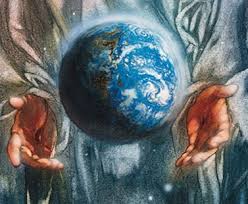
images-7Our beautiful, blue, wet planet is floating in a Universe awash in water in some form, mostly very cold gas or ice.
Ice is found around new stars and old ones;
it’s near black holes as well as in the heart of galaxies;
it forms around dust grains and it is frozen in ice balls.
Astronomers have detected water vapor whose light fingerprint had traveled from 12 billion years ago, and
the amount in the Universe is staggering. 

Stardust Connections

None of this water was “just here” in the cosmos; each single water molecule was formed from stardust elements!

How could we ever comprehend the creativity, the love, the source of this? Indeed, “The heavens are telling the glory of God!” (Ps. 19:1) images-8

Many Earthlings enjoy being in or near moving water: rivers, lakes, oceans, pools, even bath tubs. We instinctively feel a unity, a peace, a renewal.

Knowledge about cosmic water and our mutual beginnings from stardust can add to our feeling united to the entire Universe!

Ice Connections

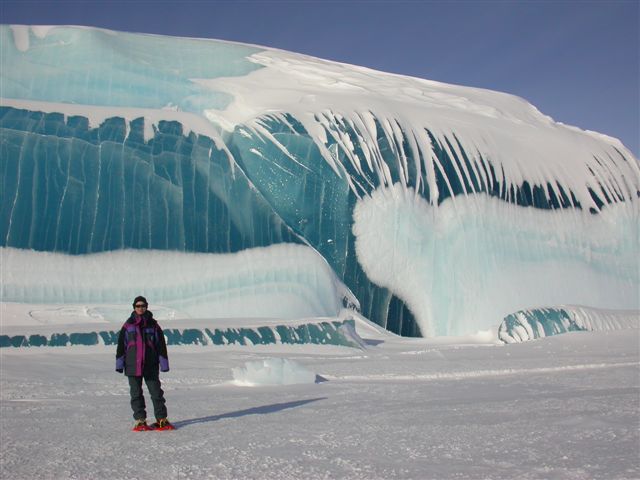
Much of the North has had a lot of ice this winter — for better and for worse. We might now feel more united with cosmic ice when we enjoy ice skating and hockey, when we are awed by ice formations, when we plop ice cubes to cool our drinks.

imagesget-attachment.aspx


Call to
Appreciation

It turns out that Earth is just one more place within the Cosmos where ice exists — and we have the awareness to appreciate it wherever it is!
Let’s deepen our appreciation of water everywhere on World Water Day March 22.
Let’s deepen it during Lent when we read stories about water and think about our sacraments.
Let’s deepen it whenever we look out at the heavens.
And, for sure, let’s deepen it by using Earth’s water reverently and sustainably.
Let’s not take it for granted!
Let’s stop individual and industrial pollution, waste, and contributions to climate change.

To adapt St. Francis’ words: Let us praise you, Lord, for Sister Water . . . .