How can “they” believe THAT?

Almost twenty years ago, Jim Carrey starred in the critically acclaimed film, The Truman Show, written by Andrew Niccol. I loved the thought-provoking premise, and I find even more applications now than I did then.

In case you missed it, here’s a summary: A corporation adopts infant Truman Burbank in order to use him as the star of a TV reality show watched 24/7 throughout the world. Truman, unaware of the fact that everyone he knows and every situation of his life is programmed on an isolated island, is just beginning to question his reality. Ed Harris plays the show’s director, Christof, who goes to any length to keep Truman ignorant of reality, which would ruin the show’s success.

Christof’s statement towards the end of the film really struck me: “We accept the reality of the world with which we are presented.” Well, sure. Why question it? We’re secure in it. And, if we become aware of life outside ours, it’s easy to blame “outsiders” for problems and it’s comfortable to believe “our” way is better than “theirs.” Hasn’t that been a successful political, religious, economic, and social tactic throughout history? Think about it!

What I loved about the show in 1998 was how it exemplified those who accepted without question, for example, advertisers’ sales pitches that our value lies in the “stuff” we have. Or how we are slow to become aware of our ingrained prejudices and stereotypes of whatever kind. Or how we accept our religious stories, all written before discoveries in cosmology, quantum physics, and even evolution. It’s challenging to move beyond the reality in which we grew up and/or to understand those who live outside it!

By now you have probably guessed why I find The Truman Show’s imaginary premise especially applicable today. In the U.S., at least, we seem to be captive within the world presented by various media. Echo chambers thrive in social media. Listening to “the other side” can be judged disloyalty to “our” side. Those who live in “the other reality” actually do threaten ours, and thus it is easy to fear them and even think them evil. This seems true regardless of which “show” one currently stars in. Christof spoke truth when he said that we accept the reality of the world with which we are presented. We barely notice, or we excuse, its exaggerations or errors.

Even with willingness to be empathetic, many are ignorant of other cultures. When I read Hillbilly Elegy (which I highly recommend), I was stunned to realize that here was a world about which I knew just about nothing. How easy, then, to judge those who act — and vote — from it. I had to consider that, given the same circumstances of education, culture, and heritage, would I have been any different?

It’s no secret that some news choices can reinforce our prejudgments and make exaggerated statements about our chosen “team” (think Breitbart, FOX, MSNBC, Daily Kos). Ditto for social media. Both sides can perceive the other as spiritually and morally degenerate, a threat to American values, and conspiring to defeat what they hold dear. Because we came from a dualistic, either-or mindset (us and them, good and bad, true and false, etc.), we have been programmed to accept one and reject the other.

At least we are aware of the biases some stations and papers will present and that other news and opinions will be absent, refuted, and judged “fake.” What about sources we watch such as local news, that present biased news and opinions without indicating their source? Because of mergers and acquisitions, massive corporations dominate the U.S. media landscape and control what we see, hear and read. In many cases, these companies control everything from initial production to final distribution.

When one or two entities own local news channels and demand that they air slanted news and opinion pieces, we might have no warning. How is our reality altered when, for example, a newscast has a daily series on Terrorism Threats? Who gives balanced statistics of where our deaths and dangers really come from? The emphasis on what is not a major threat both increases fears and neglects genuine concerns. No wonder fortunes are spent preventing problems that either don’t exist or are minor, causing money needed for real concerns to be not available. Perhaps we are called to write or call and make our viewpoints known.

I periodically receive emails marked something like “You won’t believe this.” I usually don’t, and I  check with one or more of the sites created to monitor factual accuracy and debunk rumors. These three are reliable: FactCheck.org, PolitiFact.com, and snopes.com. (I then return this information to the sender and the other receivers.)

The Truman Show spoiler alert: Truman begins to notice and to question inconsistencies. He begins to doubt the validity of his environment. He becomes aware that his life’s package is somehow incomplete. He risks his life to resolve his growing discomfort — and in the end he literally pokes a hole through his fake sky-dome and exits beyond it. There he is united with his true love, whose campaign to “Free Truman” was not in vain.

As I see it, the moral of The Truman Show for those who care about ecospirituality is this: Like Truman, we are exiting, or have exited, the world and consciousness in which many of us grew up. We feel called to live in a world, a universe, that is intrinsically interconnected, in which everything and everyone deserves respect. We all came from the same stardust; we all share it within us. Because the world, and each of us, is constantly evolving, we are becoming new each moment. We can create a future where people — starting with ourselves — are accurately informed, discerning, and contributing to a win-win future where all life is mutually enhancing and the accepted goal is the greater good of all creation.

Speaking with those who — because they live in another show — reject the threats to all life from climate change, nuclear proliferation, violence, pollution, poverty, inequality, trafficking, species extinction, etc., can be very challenging. We can do it better if we try to understand the “show” in which each of us “stars” and listen to others with respect and patience.

Good law schools “demand that [students] imaginatively and sympathetically reconstruct the best argument on the other side,” I read recently in TIME (July 24, 2017, Heather Gerken, dean of Yale Law School). “Lawyers learn to see the world as their opponents do ….” We should fight for what we believe, but “it’s crucial to recognize the best in the other side and the worst in your own.”

Trying to understand the “reality show” that defines opponents and informs their fears and judgments might not always, or immediately, be effective, but it is the most successful method to date.

I welcome your suggestions/ stories of how to escape, or help others to escape from, faulty or incomplete reality shows.

EIGHT REASONS … PLASTIC WATER BOTTLES

EIGHT REASONS TO RETHINK USING PLASTIC WATER BOTTLES: 

About Water

(Statistics vary; I did my best to use generally accepted numbers.)

First let’s rethink the value of water — the gift that dates to the stars and required billions of years to accumulate on our planet. All life (that we know about) started and survived because of it. Presumably, all future humans and species will depend on it. Water plays a key role in religious rituals such as baptisms. Water is essential for growing crops, providing beauty and renewal; it cools us …. Sister Water merits our respect and care!

About Plastic Water Bottles

In 1973,  a DuPont engineer patented polyethylene terephthalate (PET) bottles, the first to be used for bottling water. Its light weight and resistance to breaking seemed advantageous. But would people buy a free product?  Indeed they have, and while it’s sometimes necessary, the rest seems to be nothing but clever advertising and dependence on convenience. What follows applies to all plastic bottles, but focuses on water because there are easy alternatives.

Even Pope Francis has asked us to reduce use of both plastic and water. From Laudato Si’:

There is a nobility to care for creation through little daily actions, and it is wonderful how education can bring about real changes in lifestyle. Education in environmental responsibility can encourage ways of acting which directly and significantly affect the world around us, such as avoiding the use of plastic and paper, reducing water consumption  ….. (par. 211)

Here are eight reasons to rethink the use of plastic water bottles:

1. You testify that drinking water is a human right, not a for-profit commodity —

Water is absolutely essential in maintaining human life, and nothing can substitute for it. On 28 July 2010, the United Nations General Assembly explicitly recognized the human right to water and sanitation and acknowledged that clean drinking water and sanitation are essential to the realization of all human rights. ( Resolution 64/292)

2. You save the water used to make plastic bottles — 

For a true water footprint, consider all freshwater used in production: water used for drilling the petroleum for the plastic, water used in production, water used making packaging. It takes a minimum of 3 liters of water to produce 1 liter of bottled water, but amounts could be up to six or seven times greater when everything is considered.

3. You save the water put into the bottles — 

Activists throughout the world strongly object to having their water bottled and sold back to them. The damage to their loved locales cannot be repaired. Companies take scarce water and sacred water. It’s a matter of justice! There are 50 billion water bottles consumed every year, about 30 billion of them in the U.S. Do the math.

4. You save the energy used to make and transport plastic bottles — 

Producing, packaging and transporting a liter of bottled water requires between 1,100 and 2,000 times more energy on average than treating and delivering the same amount of tap water, according to the Pacific Institute. Scientists of the Pacific Institute estimate that just producing the plastic bottles for bottled-water consumption worldwide uses 50 million barrels of oil annually—enough to supply total U.S. oil demand for 2.5 days. We all know how fossil fuels damage our climate.

If you imagine that every bottle of water you drink is about three-quarters water and one-quarter oil, you’ll have a pretty accurate picture of how much energy it takes to put that bottle of water in your hand.

5. You prevent pollution from bottles which, even if recycled, take years to disintegrate — 

There is no “away” to throw things to. About 13 percent of empty bottles are recycled, where they are turned into products like fleece clothing, carpeting, decking, playground equipment and new containers and bottles. (Three cheers for the companies that do this!)

The bottles not properly recycled end in landfills or in the ocean. Those fragments absorb toxins that pollute our waterways, contaminate our soil, and sicken animals. Plastic trash also absorbs organic pollutants like BPA and PCBs. They may take centuries to decompose while sitting in landfills, amounting to endless billions of little environmentally poisonous time bombs.

Plastic bottles and plastic bags that break down into smaller fragments over time are the most prevalent form of pollution found on our beaches and in our oceans. Every square mile of the ocean has over 46,000 pieces of floating plastic in it! Millions of pieces of plastic debris float in five large subtropical gyres in the world’s oceans. But even more plastic might be on the oceans’ floor, doing damage we can’t yet study.

“Besides providing food and raw materials, the oceans provide various essential environmental benefits such as air purification, a significant role in the global carbon cycle, climate regulation, waste management, the maintenance of food chains and habitats that are critical to life on earth.” (from Cardinal Turkson’s recent statement to the United Nations)

6. You protect fish, birds, and humans from effects of plastic pollution —

Birds and their young die from eating and being strangled by plastic debris in oceans and on land strewn with plastic pollution. These ingested chemicals can then affect humans when we eat contaminated fish. Not only are we severely harming the land, air and water around us, but the rest of the world has to pay the price for our thoughtless over-consumption. Our children and generations to come will be dealing with the problems we caused.

7. You avoid the toxins that is in, and can leach from, plastic bottles — 

BBC reports that a 2018 study of several brands of plastic water bottles found that 93% of the water was contaminated with micro plastics. It’s not a question of best brands; the plastics are everywhere. Another study, by CertiChem, found that more than 95 percent of the 450 plastic items tested proved positive for estrogen after undergoing sunlight, dishwashing, and microwaving. Even BPA-free products tested positive for released chemicals having estrogenic activity.

8. You save lots of money!

And so

Where safe drinking water is not available due to scarcity or pollution, plastic water bottles are needed. Otherwise, to protect the future of our beloved (and only) planet, our water and food supply, our climate, our oceans — use a thermos with tap water. Many varieties of faucet filters and pitcher filters exist. Group events can supply pitchers of water and glasses — or drinking stations with compostable cups. Some cities, universities, stores (e.g., Selfridges) and tourist areas (e.g., the Grand Canyon) have banned the sale of bottled water; some supplied drinking stations. Alert those who are unaware. To quote Pope Francis again: There is a nobility to care for creation through little daily actions.

Do You Know Where You Live?

Inventions like GPS and Google Earth help us to know where we are. Settle for those, however, and you know only a partial answer to the question: Do you know where you live?

But first, a simple quiz.

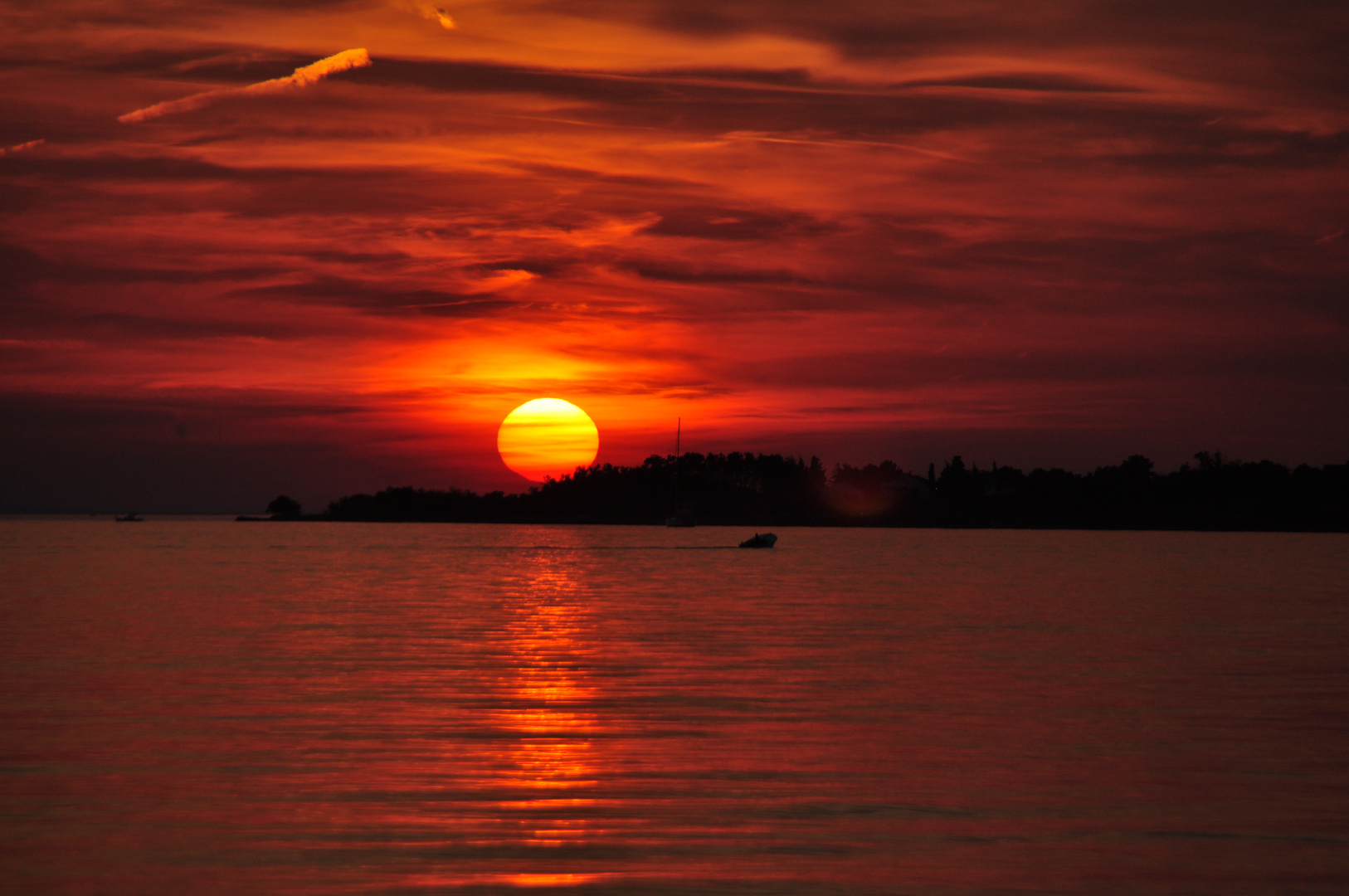
1. What do you call this?

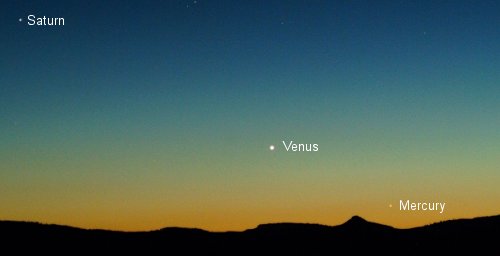
2. What do you call this?

If your answers were not sunrise or sunset, congratulations! You can probably skip to the end.* For the others:

Unlike those who flatly rejected what scientists Aristarchus of Samos, Nicolaus Copernicus, and Galileo Galilei had discovered, we’d probably all answer this question correctly:       Does the Sun circle the Earth each day?

We KNOW that it does not, but misleading “evidence” still prevents our integrating that knowledge. In spite of knowing better, most people think of themselves on a flat Earth with the Sun doing the traveling. Not too surprising, actually. That’s what it looks like.

Many of us can thank Brian Swimme for an experience that helps us FEEL ourselves part of a huge planet rotating a full rotation each 24 hours while also whirling around the Sun. In Hidden Heart of the Cosmos, pp. 26 – 30, Swimme suggests we try an experience in the evening. Since I can look east to Lake Michigan, it was easier for me to try it in the morning. Here’s what I did:

When the night sky began to lighten, I went to the beach and consciously rooted myself in the sand on which I sat. I gradually expanded that realization to my neighborhood, city, state, country, hemisphere, the entire planet; and inward to Earth’s atmosphere, crust, mantle, and core. How immense! By then it was not too challenging to imagine myself part of the whole.


As Swimme recommends in Hidden Heart, I found Venus which, he explains, is “65 million miles from the Sun, about a third closer than the Earth, which is 93 million miles from the Sun. [All the planets] are moving in a single plane around the Sun.” While numbers aren’t essential, do remember that Venus is one third closer to the Sun.


In addition to the importance of depth perception for this experiment, it is also important to envision how huge the Sun is — its volume is  approximately a million times the size of Earth.

Keeping those relationships in mind, I pictured the gigantic Sun NOT MOVING below the horizon. (It does move slightly, but not around us.) As the first sliver of the Sun appeared and slowly became larger, I FELT that I was tipping toward it. I FELT the urge to grab the ground. This was a very new — and disorienting — experience!

However, that’s not the only way we are moving. Brother Sun is powerfully whirling our Earth and the other planets around it by its gravitational power. If the Sun lost this pull, we would “sail off into deep space.” Wow!

In my experience, once FELT, never forgotten. Life goes on and I no longer lose my balance concentrating on this. But I am always deepening my consciousness of moving east, especially when I look at the lake. I always note where East is when I go someplace new because I need to know which way Earth and I are traveling in the bigger picture.

The Solar System, however, is not the last word about where we are. Our Solar System is a speck within the Milky Way Galaxy, which is but one of billions of galaxies in our universe. I think our consciousnesses need to evolve before we can comprehend the full extent of where we are — and how united we are on our precious planet. We can each contribute to that evolution!

Next time you look out at the stars — which, with a little imagination, we can do during the day — stop for a moment to consider the reality of where you really are! When I do, it challenges me to reject the dated concept of heaven as “above,” and to consider what Jesus meant when he spoke in Aramaic about heaven. According to visioncraft.org/aramaic/intro.htm, “D’bwashmaya conjures the images of light, sound, and vibration spreading out and pervading all. In essence, then, ‘heaven’ is conceived not so much as a place but as a dimension of reality that is present everywhere.” And that challenges me to deepen my conception of the divine – all because I know where I live!

* To date, we do not have universal terms to replace “sunrise” and “sunset” because too few live in the reality of where they are. Please share (in comments) updated language that works for you. Thanks!