Capturing the Depth
Brian Swimme notes that “Life created the human to capture the depth of things.” To capture: interesting choice of verb. How do we capture the depth of things?
Enduring Depth
 Jesus came that we might have life, abundant life (John 10:10). His hearers had to discover new ways to integrate what they always believed with the new depth that Jesus offered: the Life he said he was. People then and now sometimes had/have major challenges capturing Jesus’ message of love and forgiveness, inclusion and self-giving.
Believers listen to the still small voice of God within, the voice of our souls, the whispers of our hearts. We earnestly listen to the signs of the times to direct our ministry. We’ve done it for decades, but many now feel the need to update our methods in light of the new stories from science. Are these new revelations calling us to develop new ways of capturing previously unguessed depths?
I think it’s safe to say that those interested in ecospirituality (by whatever name) are eager to deepen their understanding of the depths: not just of the Universe, but of its Source, enlivening Power, Creator, Mystery (again, by whatever name). We also want to capture how Jesus fits into the new story.
About Receptors
Thinking about the way things are captured reminds me of three recent experiences:
A while ago I watched Barry Kibrick, host of PBS’ Between the Lines, interview  Gerald Schroeder, author of Genesis and the Big Bang, Science of God, and Hidden Face of God. Gerald was explaining why, if a tree fell in the forest, there would be no sound. The energy waves exist, but something or someone with the physical equipment to receive (capture) the waves is required to make noise possible. As would be expected considering the titles of his books, the interview continued with his insights about the big questions of personal consciousness, God, and death. But he had me with capturing sound.
 More recently I was rereading sections of Mary Jean Irion’s She-Fire, A Safari Into the Human Spirit. Her book has treasures of several types, and I always gain from perusing the many pages I have dog-eared. This time I stayed with her reflection on the blue sky she saw in Kenya. Mary Jean writes: Blue is not a thing in itself. It does not exist. It happens only in the relationship of matter, light, and cones in the eye. Take away dust in the air, or take away light, or take away eyes — and there is no color. Yet there it is: who cannot see it? The sky, so help me, is blue today. Like Gerald Schroeder, Mary Jean goes on to explore thoughts about God. But she had me at capturing blue.
One more: Jacob Berkowitz’ The Stardust Revolution recounts the recent discoveries  concerning our origin in the stars. Essentially connected are the stories of the prescient scientists who developed the tools that made possible these discoveries. Whereas the equipment to catch sound waves and to see color came without human help, learning about the stars required patient human perseverance. Thanks to these scientists, we can now “catch” information unknown and probably unguessed until our time.
Praying Attention
Like many who are transitioning from prayers to a God-out-there and who have dealt with changing and always inadequate images of God, my journey in prayer has taken various paths. We live in a worldview that past mystics might have intuited, but which none knew scientifically. With no clear road from the past (and perhaps reluctance of some to share too honestly how they now travel) we are the generation making the prayer path. Rarely does this challenge — How do I pray? — not come up when faith-filled individuals transition from the Genesis Story to the Universe Story.
M. Basil Pennington, in his classic Centering Prayer in 1962, said: Our practice, our prayer, must be a response to reality, to what truly is. Well, think of all we’ve learned about reality since 1962! Think how Earth’s travails, and our awareness of them, have deepened since 1962! Think what we’re learning about the unity of all life! Can we capture the new depths when our minds have not yet had time to evolve ways to grasp these new realities?
Might prayer in our time require evolving new receptors so we can better “tune in” to the Universe — where the Transcendent lives and acts? Every religious insight and major figure, including Jesus, is part of that primary story and cannot be adequately known divorced from it, yet no religious founder knew it. Might dedicated pray-ers be called to evolve adequate receptors simply by their persevering efforts to stretch their minds and hearts and lifestyles?
New Depths from Science
Exploring and relating to the depth of the Mystery we call God is different now that we’re aware of being interconnected with the consciousness and totality of the Cosmos, aware of contributing to its evolution, aware of the inadequacy of any image to capture that reality. We know about energy popping in and out, fluctuating between waves and particles; we are learning about exoplanets and cosmic kin. We try to grow our Christian beliefs in this new soil, but no wonder we sometimes feel inadequate!
For example, even Rev. Cynthia Bourgeault acknowledges that her brilliant The Holy Trinity and the Law of Three will be challenging. Her description of the ternary principle and its applications to theology force a forging of new brain paths. Yet how worth the effort to follow her journey into a new model for God and its more spacious container for the rich mythological and personal language of traditional Christian understanding. Hinting at what’s coming, she says: . . . most of the paradigm distress besetting contemporary trinitarian theology has arisen out of trying to bottle into particle format what is intrinsically a wave. How shall we capture these depths?
Our Part
I like thinking that my/our loving and persevering (and oftentimes tedious and confusing) efforts to capture the depths of things never before known will contribute to the evolution of new receptors. Isn’t this sure to happen? We do influence evolution, we do alter cosmic consciousness, we do create morphogenic fields. Our efforts contribute to easing the task of future generations to comprehend theological insights as evolution progresses to the Omega Point.




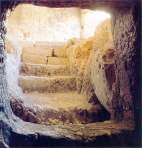 to Holy Week and Easter — with Earth Day very soon thereafter —

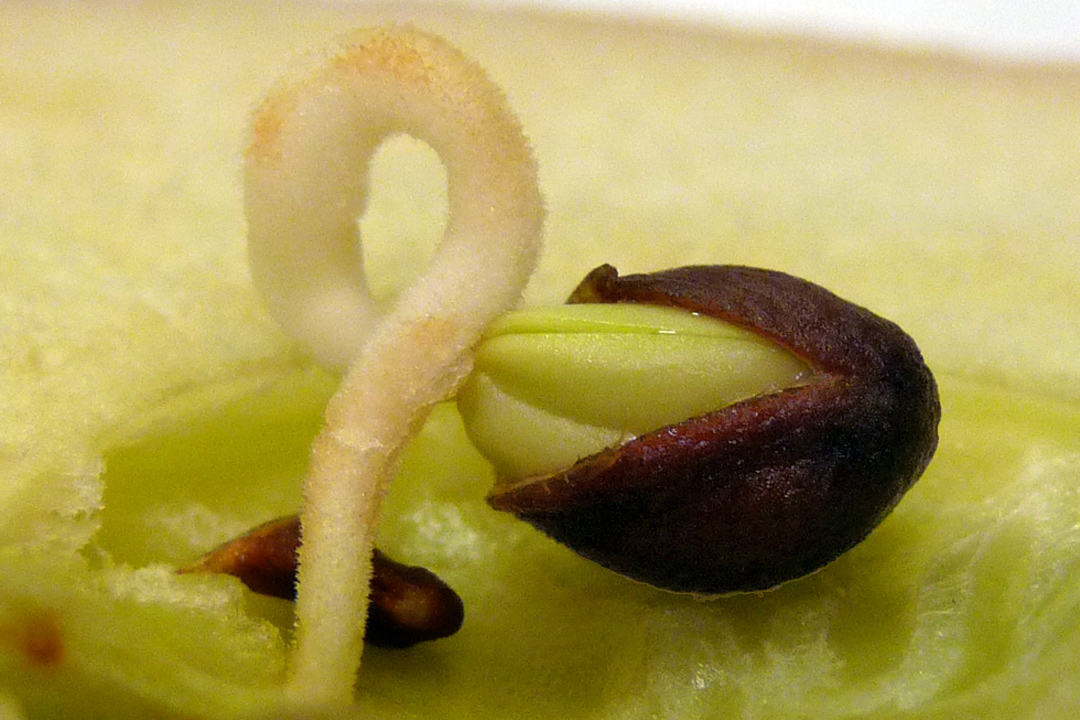
 that gives way to adulthood. Each moment cells die to give space/opportunity for others. David S. Toolan, SJ, writes: We regrow our entire physical body as we do hair and nails. Nothing in our genes was present a year ago. The tissue of our stomach renews itself weekly, the skin is shed monthly, and the liver regenerates every six weeks. Every moment, a portion of the body’s 10[28] atoms is returning to the world outside, and ninety-eight percent of them are replaced annually. It’s automatic!


 ecospirituality resources