Archives

Learning from Nones

Though many have been taught by “nuns” (the unofficial term for religious sisters*), I suggest that we can also learn from “nones” (the category of people who do not choose an official denomination). 

The number of nones increases each year. According to National Geographic, in 2016, “Nones are the second largest religious group in North America and most of Europe. In the United States, nones make up almost a quarter of the population. In the past decade, U.S. nones have overtaken Catholics, mainline protestants [sic], and all followers of non-Christian faiths.” (Christianity is still the largest group in the U.S., but not all faithful church-goers believe every word of dogma and tradition.

These facts can cause anxiety and bewilderment for some religious people and groups, but I believe they offer us opportunities — such as those implied in a recent statement by the Presbyterian Church (USA). Following its strong “Affirmation of Creation,” they write:  

“Among the reasons given by teens and young adults for their dissociation from churches were that ‘churches are out of step with the scientific world we live in’ (29%) and ‘Christianity is anti-science’ (25%).” While affirming science, the statement does not hide from this fact: “Yet these same scientific discoveries also challenge traditional ways of thinking about God, God’s creation, and God’s creative activity.”  

The statement continues: “In 1947 the Jesuit paleontologist Pierre Teilhard de Chardin described this challenge. When we speak of a ‘theology of modern science,’ it obviously does not mean that by itself science can determine an image of God and a religion. But what it does mean, if I am not mistaken, is that, given a certain development in science, certain representations of God and certain forms of worship are ruled out, as not being homogeneous with the dimensions of the universe known to our experience. (Emphasis in the original).”

I started this ecospiritualityreources website (cf my Home page) largely because “What people seemed to appreciate was help in understanding the evolving worldview coming from new science and new theology so they could better integrate their beliefs into that worldview.” I myself had suffered from lack of help when my increasing scientific knowledge bumped roughly against items of dogma and tradition. Further, as a Sister of the Holy Child Jesus, I am pledged “to help others to believe that God lives and acts in them and in our world” — and that cannot be done without a constantly deepening understanding of the Mystery we call God within the world and worldview in which we live.

Pope Francis, speaking about the death penalty at a recent Vatican conference celebrating the 25th anniversary of the Catechism of the Catholic Church, clearly emphasized that “Tradition is a living reality”:  “Only a partial vision can think of ‘the deposit of faith’ as something static. One cannot conserve the doctrine without making it progress, nor can one bind it to a rigid and immutable reading without humiliating the Holy Spirit.”

Michel Castro, Professor of Fundamental Theology in the Theology Faculty of Lille University, notes that “since the very beginning of Christianity, the faith has been expressed anew according to new cultures, and new questions, sensitivities, and realities. A tradition, if it is not to die, must express its convictions in the language of the time: a language that will, therefore, be new.”

Rather than being fearful of the objections and rejections coming from nones, we can use these to grow a faith consistent with the scientific signs of our time. Nones offer us the opportunity (and perhaps the obligation) to explore what we believe, especially about the God whose truth no denomination can ever fully possess. 

Adhering rigidly to beliefs while refusing to discern them in the light of new developments seems to question God’s power in an evolving world and the power given to us as humans — in Pope Francis’ words: “humiliating the Holy Spirit.” It’s easy to forget that creation began billions of years ago; the drive for life is relentless; due to intrinsic interconnections, nothing can remain static because everything within which we live is ever adapting. And we need always to apply the heart of Jesus’ life and message to our times. 

The Catholic Church is no stranger to such changes. Starting with what was judged correct in its time, it has considered truths not before known but now revealed, and organically grown and developed something more appropriate. The Church’s position on slavery and limbo are but two examples.  

Every word of Sacred Scripture and most religious traditions and rituals came before anyone knew that planet Earth revolved around the Sun, not to mention that creation is nearly 14 billion years old and there are billions of galaxies. We had no access to the social and biological sciences  — the lack of which result in so many current “isms” and hostilities.

No one guessed that we are made of stardust. It’s still new to realize, as Thomas Berry did, that Earth is a communion of subjects rather than a collection of objects. How many times do people still look up when thinking of God, despite professing that God is everywhere? How often do we think of “people” as separate from the air they breathe and the other gifts of creation on which our lives interdepend?

From nones we can learn, if nothing else, that insisting on what belonged to another world view will not satisfy the science-aware mind. We learn from nones the urgency of adapting, growing, altering clothing that no longer fits in order to accomodate a growing body. We can learn to trust the Spirit acting in us and in the world of our time. 

Among recent books that “separates faith from fiction and makes sense of belief,” I recommend It’s Not Necessarily So (Caritas, 2016) by Fr. Richard G. Rento (long-time friend of the SHCJ). Cf my review (and other suggestions) in https://ecospiritualityresources.com/books-sites-videos/.

Please share your relevant personal experiences and recommended books in Comments.


* A “nun” is a religious woman who lives a contemplative and cloistered life of meditation and prayer, while a “religious sister” lives an active vocation of both prayer and service, often to the needy, ill, poor, and uneducated.
Introducing Betsey Crawford

Before introducing Betsey Crawford and her site, I want to alert those interested in Advent resources and/or a “deeper dive” into Incarnation in the 21st century that Advent in the New Universe Story, 2017 is complete. For information, see https://ecospiritualityresources.com/advent/.

~ ~ ~

I am delighted to introduce readers not yet aware of her site to Betsey Crawford at http://thesouloftheearth.com/journal-nature-and-spirit/. With my gratitude to Betsey, I will share a sample from her site. It usually features both her photos and her own words: stories and experiences. She has explored topics such as birds, roses, bees, asteraceae – yes, you’ll learn things! But beyond the knowledge, you’ll love the poetry in Betsey’s words and the beauty of her photography — especially the close-ups of flora and fauna. Her journals tend to be stories, so, rather than interrupting her narratives, I have chosen to use excerpts from her “Laudato Si’, repictured” even though the words are mostly Pope Francis’ in Laudato Si.

From “Laudato Si, repictured” starting with the end of Betsey’s introduction

… Pope Francis, Betsey explains, “talks about the importance of appreciating beauty, so that we will want to preserve it. That, naturally, is where I come in, combining Pope Francis’ words and photos of our gorgeous earth.

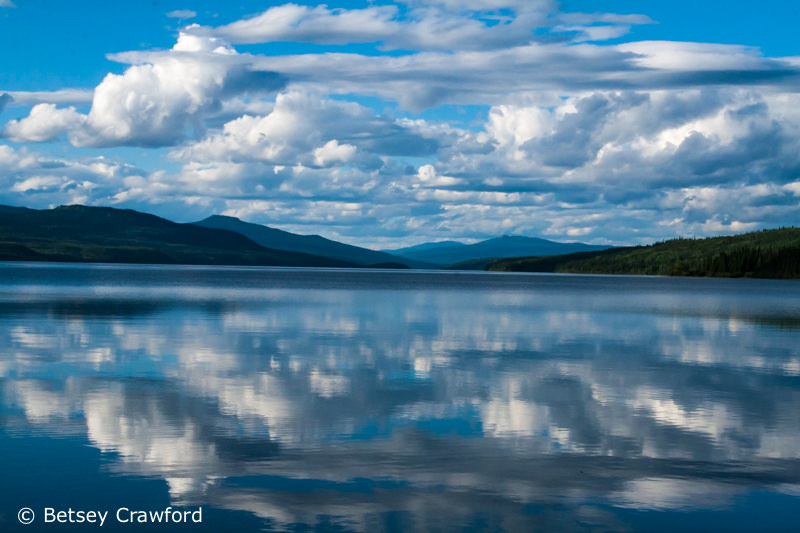
Dease Lake, British Columbia

We have forgotten that we ourselves are dust of the earth; our very bodies are made up of her elements, we breathe her air and we receive life and refreshment from her waters.

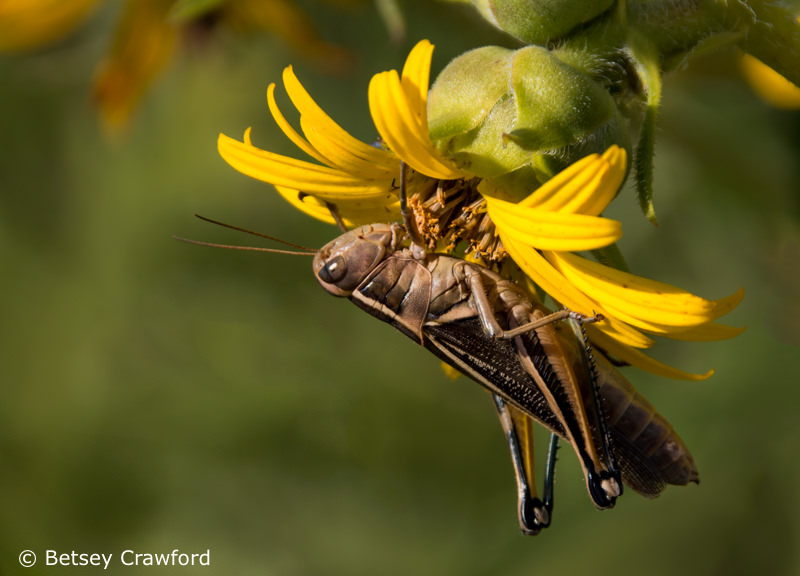
Cricket on whole leaf rosinweed (Silphium integrifolium) Konza Prairie Preserve, Manhattan, Kansas

It is not enough…to think of different species merely as potential ‘resources’ to be exploited, while overlooking the fact that they have value in themselves. Each year sees the disappearance of thousands of plant and animal species which we will never know, which our children will never see, because they have been lost for ever. The great majority become extinct for reasons related to human activity. Because of us, thousands of species will no longer…convey their message to us. We have no such right.

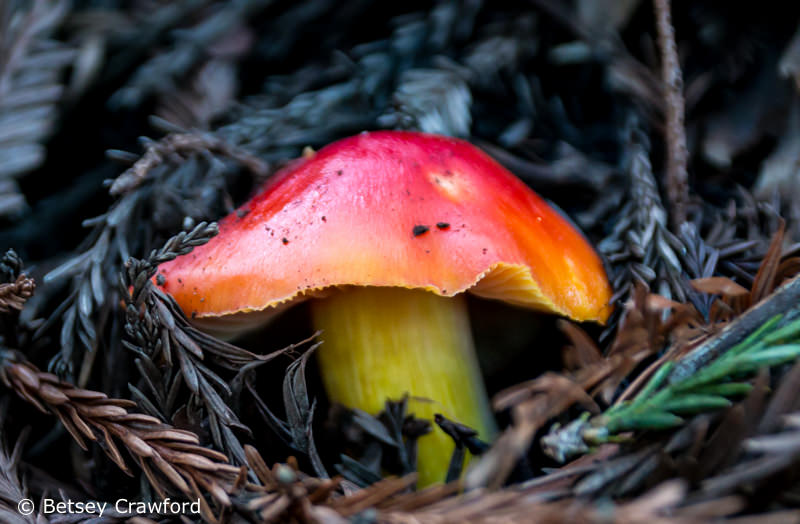
Mushroom after a rainy winter in Blithedale Canyon, Larkspur, California

It may well disturb us to learn of the extinction of mammals or birds, since they are more visible. But the good functioning of ecosystems also requires fungi, algae, worms, insects, reptiles and an innumerable variety of microorganisms. Some less numerous species, although generally unseen, nonetheless play a critical role in maintaining the equilibrium of a particular place.


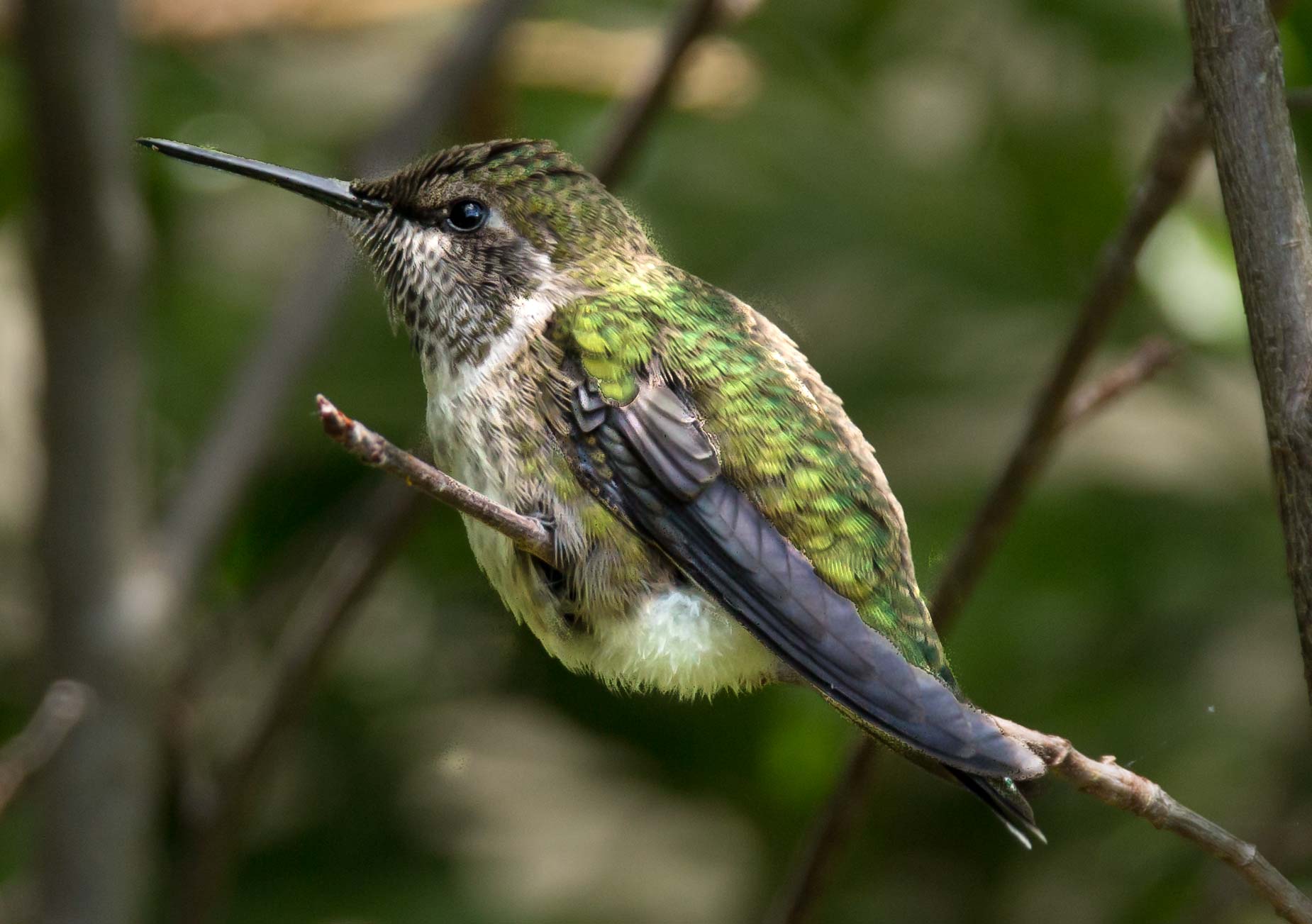
Hummingbird in a native plant garden in Mill Valley, California

Because all creatures are connected, each must be cherished with love and respect, for all of us as living creatures are dependent on one another. Each area is responsible for the care of this family.

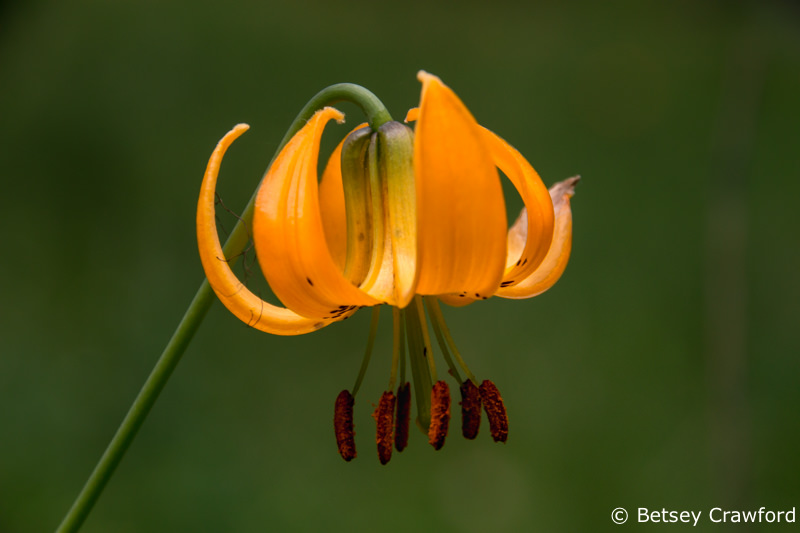
Columbia lily (Lilium columbanium) at a roadside stop in southern British Columbia

We were not meant to be inundated by cement, asphalt, glass and metal, and deprived of physical contact with nature.

~ ~ ~

Betsey’s “Laudato Si, repictured” site continues with more beautiful photos and quotes that you’ll enjoy. I predict you’ll also like Betsey’s photos with her own words at http://thesouloftheearth.com/journal-nature-and-spirit/


EIGHT REASONS … PLASTIC WATER BOTTLES

EIGHT REASONS TO RETHINK USING PLASTIC WATER BOTTLES: 

About Water

(Statistics vary; I did my best to use generally accepted numbers.)

First let’s rethink the value of water — the gift that dates to the stars and required billions of years to accumulate on our planet. All life (that we know about) started and survived because of it. Presumably, all future humans and species will depend on it. Water plays a key role in religious rituals such as baptisms. Water is essential for growing crops, providing beauty and renewal; it cools us …. Sister Water merits our respect and care!

About Plastic Water Bottles

In 1973,  a DuPont engineer patented polyethylene terephthalate (PET) bottles, the first to be used for bottling water. Its light weight and resistance to breaking seemed advantageous. But would people buy a free product?  Indeed they have, and while it’s sometimes necessary, the rest seems to be nothing but clever advertising and dependence on convenience. What follows applies to all plastic bottles, but focuses on water because there are easy alternatives.

Even Pope Francis has asked us to reduce use of both plastic and water. From Laudato Si’:

There is a nobility to care for creation through little daily actions, and it is wonderful how education can bring about real changes in lifestyle. Education in environmental responsibility can encourage ways of acting which directly and significantly affect the world around us, such as avoiding the use of plastic and paper, reducing water consumption  ….. (par. 211)

Here are eight reasons to rethink the use of plastic water bottles:

1. You testify that drinking water is a human right, not a for-profit commodity —

Water is absolutely essential in maintaining human life, and nothing can substitute for it. On 28 July 2010, the United Nations General Assembly explicitly recognized the human right to water and sanitation and acknowledged that clean drinking water and sanitation are essential to the realization of all human rights. ( Resolution 64/292)

2. You save the water used to make plastic bottles — 

For a true water footprint, consider all freshwater used in production: water used for drilling the petroleum for the plastic, water used in production, water used making packaging. It takes a minimum of 3 liters of water to produce 1 liter of bottled water, but amounts could be up to six or seven times greater when everything is considered.

3. You save the water put into the bottles — 

Activists throughout the world strongly object to having their water bottled and sold back to them. The damage to their loved locales cannot be repaired. Companies take scarce water and sacred water. It’s a matter of justice! There are 50 billion water bottles consumed every year, about 30 billion of them in the U.S. Do the math.

4. You save the energy used to make and transport plastic bottles — 

Producing, packaging and transporting a liter of bottled water requires between 1,100 and 2,000 times more energy on average than treating and delivering the same amount of tap water, according to the Pacific Institute. Scientists of the Pacific Institute estimate that just producing the plastic bottles for bottled-water consumption worldwide uses 50 million barrels of oil annually—enough to supply total U.S. oil demand for 2.5 days. We all know how fossil fuels damage our climate.

If you imagine that every bottle of water you drink is about three-quarters water and one-quarter oil, you’ll have a pretty accurate picture of how much energy it takes to put that bottle of water in your hand.

5. You prevent pollution from bottles which, even if recycled, take years to disintegrate — 

There is no “away” to throw things to. About 13 percent of empty bottles are recycled, where they are turned into products like fleece clothing, carpeting, decking, playground equipment and new containers and bottles. (Three cheers for the companies that do this!)

The bottles not properly recycled end in landfills or in the ocean. Those fragments absorb toxins that pollute our waterways, contaminate our soil, and sicken animals. Plastic trash also absorbs organic pollutants like BPA and PCBs. They may take centuries to decompose while sitting in landfills, amounting to endless billions of little environmentally poisonous time bombs.

Plastic bottles and plastic bags that break down into smaller fragments over time are the most prevalent form of pollution found on our beaches and in our oceans. Every square mile of the ocean has over 46,000 pieces of floating plastic in it! Millions of pieces of plastic debris float in five large subtropical gyres in the world’s oceans. But even more plastic might be on the oceans’ floor, doing damage we can’t yet study.

“Besides providing food and raw materials, the oceans provide various essential environmental benefits such as air purification, a significant role in the global carbon cycle, climate regulation, waste management, the maintenance of food chains and habitats that are critical to life on earth.” (from Cardinal Turkson’s recent statement to the United Nations)

6. You protect fish, birds, and humans from effects of plastic pollution —

Birds and their young die from eating and being strangled by plastic debris in oceans and on land strewn with plastic pollution. These ingested chemicals can then affect humans when we eat contaminated fish. Not only are we severely harming the land, air and water around us, but the rest of the world has to pay the price for our thoughtless over-consumption. Our children and generations to come will be dealing with the problems we caused.

7. You avoid the toxins that is in, and can leach from, plastic bottles — 

BBC reports that a 2018 study of several brands of plastic water bottles found that 93% of the water was contaminated with micro plastics. It’s not a question of best brands; the plastics are everywhere. Another study, by CertiChem, found that more than 95 percent of the 450 plastic items tested proved positive for estrogen after undergoing sunlight, dishwashing, and microwaving. Even BPA-free products tested positive for released chemicals having estrogenic activity.

8. You save lots of money!

And so

Where safe drinking water is not available due to scarcity or pollution, plastic water bottles are needed. Otherwise, to protect the future of our beloved (and only) planet, our water and food supply, our climate, our oceans — use a thermos with tap water. Many varieties of faucet filters and pitcher filters exist. Group events can supply pitchers of water and glasses — or drinking stations with compostable cups. Some cities, universities, stores (e.g., Selfridges) and tourist areas (e.g., the Grand Canyon) have banned the sale of bottled water; some supplied drinking stations. Alert those who are unaware. To quote Pope Francis again: There is a nobility to care for creation through little daily actions.