Archives

Christmas and Migrants

Two Christmas stories ring out for our attention this Christmas season:

#1: We read that Joseph and his pregnant wife were forced from the security of their home in Nazareth because a selfish leader insisted that people travel to their ancestral home town for a census. Mary’s pregnancy exacerbated this disruption in their lives. And when they arrived after their challenging journey, they were turned away until someone (Who? Why? How?) found a spot fit for animals that  they could share.

#2: According to Scripture, after Jesus was born, they had to travel again, this time as refugees fleeing for their lives. They endured the trip to Egypt, possibly not knowing the language, hoping to find fellow Israelites and raise their child in safety even though they were part of an unwanted minority.

Allowing for Bethlehem’s being overcrowded, Egypt’s not wanting foreigners, resources being scarce, and “the other” being judged a threat, one hopes that the travelers found some welcoming strangers along the way.

Since these stories wound up in Scripture (see note at the end), one assumes Mary and Joseph shared them with their son as he grew up. Perhaps they caused Jesus to be more alert to the messages in the Hebrew texts calling for aliens to be welcomed. Perhaps it was these memories that resulted in the famous passage in Matthew:

For I was hungry and you fed me … homeless and you gave me a room ….

This message is not political, nor is it exclusively Christian. Jesus did not belong to a political party nor sign on to “liberal” causes. Forget politics here. Jesus is telling us that caring for refugees is an essential duty, period. This message is in all religions, but practiced by some better than by others. “Nones” also care about other humans. Those who believe that “Nothing is itself without everything else,” as Thomas Berry said, know that we are intrinsically bound to each and every refugee.
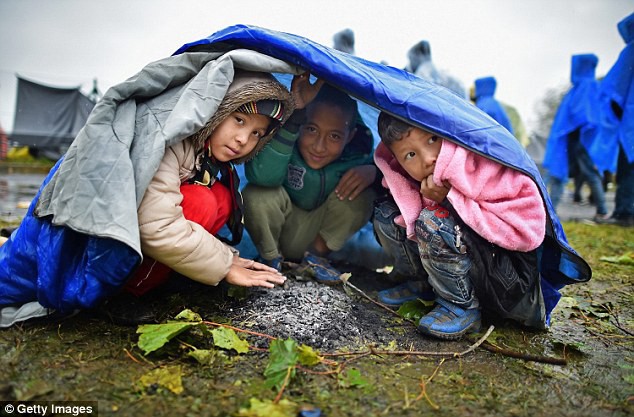
How many men, women and children are refugees today? 

First, remember that the numbers consist of real people with real names, loving families, and at least half are children. The total is over 65 million — so difficult to imagine! Comparisons might help: Lebanon has c. 6 million people; NYC has c. 8 1/2 million; the state of California has c. 40 million; Italy has c. 59 million.

What countries accept refugees?

Numbers vary each year, but the top host countries by number of refugees taken are Turkey and Pakistan. The top countries by percentage of their population in 2015 were Lebanon, with c. 210 refugees for every 1000 Lebanese inhabitants and Jordan with 90 refugees for every 1000 Jordanian inhabitants. (The US accepted 0.84 per thousand citizens! Our population is c. 326 million. How many would we take if we were as welcoming as Lebanon?)

Why do people leave their homes?

People flee due to war; famine; religious, sexual, and/or racial persecution; climate-related floods, droughts fires; physical threats from gangs and oppressive governments; stagnant economies. They have no choice but to risk leaving.

What risks must be considered before leaving everything behind?

Before leaving homes, families, work, possessions, language, dreams, religious communities, beloved land — refugees know their travels will be not just difficult but dangerous. Many die. (According to the International Organization for Migration, 22,500  migrants have died or disappeared since 2014.) Women are often raped. People can be sold into slavery and trafficked. Smugglers can take their money and leave them stranded or dead. At best they might face years in refugee camps. Food and shelter can be minimal. Those with “pre-existing conditions” face special hardships and lack of medication. Children lose their childhoods plus adequate nutrition and schooling during their best learning years.

 Possible New Year’s Resolutions

If today you hear a “still, small voice” within, harden not your hearts. Here are some possible actions:

• Ask your members of Congress to accept and support migrant families here in the United States and around the world.
• Support the organizations that help refugees. Three of many:

– UN Refugee Agency (UNHCR)
       – Catholics Confront Global Poverty (an initiative of the United States Conference of Catholic Bishops and Catholic Relief Services)
– Catholic Refugee Services
• Ask your mayor/ city leader to establish a policy of welcoming those who contribute to the well-being of the city. (For Chicago’s “Welcoming City Ordinance,” see https://www.cityofchicago.org/city/en/depts/mayor/press_room/press…)
• Pope Francis asked that every Catholic parish be responsible for one refugee family. I am proud to say that my parish — St. Gertrude, Chicago — adopted two Rohingya families that waited eight years in a camp before being accepted in the US. We are eager to adopt more families, but since refugees are officially not welcome in the U.S., our right to practice our faith is denied!

• In January, be attentive to these opportunities to remember migrants and refugees — as well as those trafficked while attempting to migrate:

        January: National Slavery and Trafficking Prevention Month. Also Poverty Awareness.

        Jan. 1: World Peace Day. Pope Francis chose “Migrants and Refugees” as the theme.

        Jan. 7 – 13: National Migration Week

        Jan. 11: National Human Trafficking Awareness Day

        Jan. 17: World Day of Migrants and Refugees

The plight of refugees is not limited to one month, but we can make a difference for them by acting during January.

Note: In the interest of updated theology, I add this excerpt from an article by John J. Collins, professor of Old Testament Criticism and Interpretation at Yale Divinity School: “You have a text in the Book of Hosea that says, ‘Out of Egypt, I have called my son.’ In the Book of Hosea, the son is Israel. It means, ‘I brought Israel out of Egypt.’ If you now look at it, and you say, ‘But God’s son is the Messiah, and the Messiah is Jesus,’ well, Jesus must have been in Egypt, and we didn’t know about it. You get the story of the flight into Egypt, which gets into only one out of four gospels.”
Winter Solstice Prayer 2017

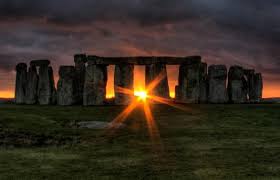
Winter Solstice occurs between the 20th and 23rd of December, the time when the ancients thought the “sun stood still” (which is the literal meaning of “solstice”). The date was determined by people living in the Northern Hemisphere. In the Southern Hemisphere, this is the longest day of the year, and far from cold and dark.

We know that the sun’s apparently-changed position each day is caused by the rotation of the Earth as it circles the Sun on a tilted axis. At the December Solstice, the Northern Hemisphere is leaning farther away from the sun than at any other time of the year.

unknown

Earlier members of our species had no knowledge of this fact. As the days became shorter, people were often frightened. Those who believed that the gods organized the travel of the sun might have initiated rituals so the gods would return light to their days. When, in fact, the following days became both longer and lighter, people in ancient times rejoiced and created traditional ways to celebrate.

Some ancient rituals survive to the present day, but many religious groups celebrate the coming of light by adding their own religious significance. When Christians began to celebrate Christmas, those in the Western church felt it was appropriate to “convert” the pagan solstice celebrations in order to honor the Light of the World. Eventually the Christmas date in the West was established for December 25th, and the solstice always precedes it. (The Eastern church chose January 6th.)

For a 3-sided pdf of just the prayer, contact terrishcj@aol.com.

Winter Solstice Ritual 2017: Celebrating Light

Advance preparation: Prepare hymns, readers, and soy or beeswax candles (See, e.g., gulliverscandles.com) for the centerpiece and for participants. Organize refreshments for socializing. Begin with minimal light. Adapt to suit your preferences.

Reader 1: On this longest night of the year, before the light overcomes the dark, sit in the dark and think about the importance of darkness. Bless mushrooms that grow in the dark and honeysuckle that sends its luscious scents into the night. Be grateful for the darkness that soothes us to sleep, the darkness that animals require for hibernation.

Reader 2: Give thanks for sheltering dark places: the rich earth where seeds germinate, the caves that harbored our ancient ancestors (and where some of our sun gods were born), the cellars that keep us safe from tornadoes, the wombs that provide our first nourishment. Acknowledge the darkness of suffering, which can deepen our appreciation of life and strengthen our connection to one another. (Reading 1 and 2 from In Nature’s Honor: Myths and Rituals Celebrating the Earth, Patricia Montley, Skinner House, 2005)

Close your eyes and relax. Let us praise the loving Mystery dwelling with us in our wondrous garden in our galaxy. Let us ponder the wonders of both darkness and light.

Reflection time

Hymn:  “Song for the Winter Solstice”(Pauline Le Bel, YouTube) or  “Long Is Our Winter” sung as a round (words below), or any appropriate hymn:
Long is our winter, dark is our night, O come, set us free, O Saving Light! (2X)
Come, set us free, O Saving Light! O come, dwell among us, O Saving Light!

Reader 3: Let us be grateful for Brother Sun, lauded by St. Francis because he “brings the day and the light You give us through him. How beautiful he is, how radiant in all his splendor. Of You, Most High, he bears your likeness.” Let us be grateful for the fusion that causes Sun’s energy. Fusion is unlike anything we experience on Earth, though scientists are trying hard to replicate the process. Fusion in stars created the stardust that resulted in each of us and everything we know on Earth.

Reader 4: In the beginning, there was silence. In the beginning, there was darkness. In the beginning, there was no-thing . . . but in the silence, darkness, and nothingness, we believe that there was Love.

Reader 5: This love infused every religious tradition of people throughout Earth’s history. In our time, many religious and secular groups include light in their December celebrations. For example, Hanukkah – the eight-day festival of lights — and Christmas each use candles to show respect for light.

Reader 6: Some Native American and Aboriginal groups also observe the Winter Solstice. They associate different beliefs and rituals with it. The Hopi tribe celebrations are “…dedicated to giving aid and direction to the sun which is ready to ‘return’ and give strength to budding life.” Their ceremony is called Soyal. We remember the many dedicated people who endured the cold and dark at Standing Rock in North Dakota and in other locations to protect the sacred land and water presently being threatened.

Reader 7: Let us celebrate and honor the gift of fire. UnknownFire has held mystery since the first Flaring Forth.  The fire’s heat warms us and gives us light. Fire is used to purify and to cook food that nourishes us. It symbolizes the presence and love of God and a passionate love of life, of others, of all creation. Lovers speak of the fire of love in their hearts.

All: May the power, warmth, passion, and mystery of fire be given us. May its radiance permeate deep within our spirit. 

Light the center candle. As ready, individuals light their candles from this center candle. When everyone has lit a candle, individuals read petitions. Add or subtract as wanted. After each, all respond: Let us give thanks.

~ For the original Flaring Forth, for the searing explosion that began all we know of the Universe, Let us give thanks.

~ For the collapse and explosions of the supernovas that delivered to the Universe new elements that would “one day sparkle as life, as consciousness, as memories of beauty laced into genetic coding.” (The Universe Story, p. 61), Let us give thanks.

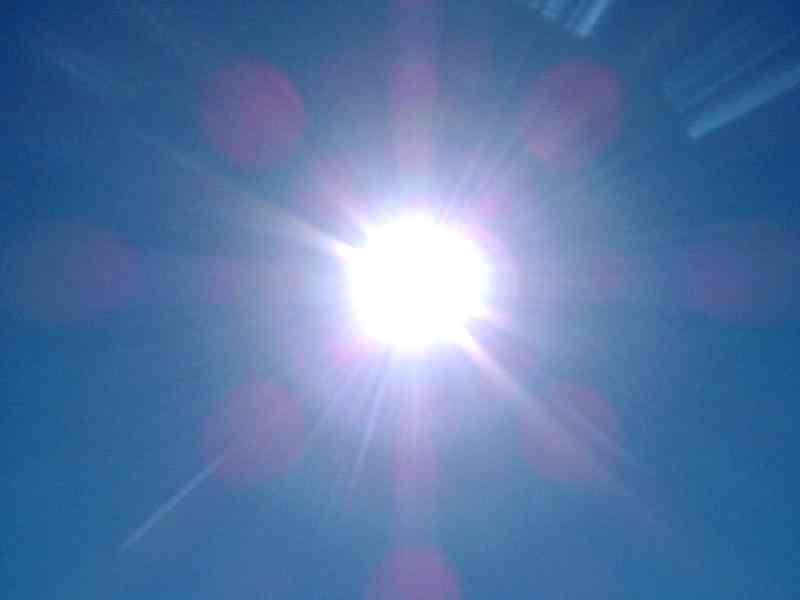
~ For the Sun that dominates our solar system and that makes life on Earth possible, Let us give thanks.sun_viewed_through_camera_lens

~ For the distance Earth stays from Sun, for Earth’s axis, for the gravitational spin assisted by our Moon, Let us give thanks.

~ For the many positive ways humans have harnessed the fire of the Sun to keep warm, to see, to grow food, to cook, and for those working to sustain healthful food and energy systems, Let us give thanks.

~ For our ancestors who, eons ago, celebrated the longest night of the year and the promise of brighter days, Let us give thanks.

~ For the birth of Jesus and the enlightenment he brought to the world, Let us give thanks.

~ For our Christian brothers and sisters preparing to celebrate Jesus’ birth, Let us give thanks. 

~ For our brothers and sisters of other religious beliefs who celebrate their special days this season, Let us give thanks.

~ For those living and dead who have enlighten the world by their example and teaching [Pause to name them if desired.], Let us give thanks.

~ For being alive to celebrate this solstice, and for beloved friends and relatives whose memories warm our hearts, Let us give thanks. 

Add as desired.

Reflection time

Optional sharing: Why is Light an appropriate focus of unity for all people everywhere?

Hymn: Any appropriate hymn or song.

Together: Today, day begins to take back the night. I wish you all the warmth of lengthening of days; light for heart, mind, soul, and body; radiant smiles given and received; and the dayspring to guide your feet onto paths of peace. (France White, SHCJ)

Extinguish candles. Socialize.

Extinction Grieving Prayer 2020

WHY NOVEMBER?

In November, religious traditions and international observances call our attention to deaths, extinctions, and thanksgiving for what remains.

For Catholics, November begins with days devoted to deceased members of our immediate and global family. We remember them all month, including the increasing numbers of men and women who have been murdered for their work preserving our common home.

It is also Native American Heritage Month, a good time to remember Native Americans’ unjust deaths, and the deaths of their cultures, languages, and religions. We strive to stop the current efforts to eliminate their sacred heritage burial grounds, plants and wildlife, and vital watersheds.

November 11th is Veterans Day in many countries. We remember the men and women who gave their lives for their countries.

In the United States, on Thanksgiving we give thanks for all of nature’s gifts. We remember those who have less.

November ends with the International Remembrance Day for Lost Species (Nov. 30). Pope Francis calls us to be people “joined … so closely to the world around us that we can feel the … extinction of a species as a painful disfigurement.” Some dismiss the loss of one species, forgetting that all life is interconnected because we all began with the first flaring forth and we are now interconnected by invisible atoms. As Thomas Berry said: “Nothing is itself without everything else.”

It is important to grieve with others (in person, virtually, or in spirit) on or near November 30. The following prayer ritual can be used on any day, alone or with others. Alter it in any way that will help you (and others) grieve and be motivated to stop extinctions and the many deaths that result from the loss of species.

~~~~

EXTINCTION GRIEVING PRAYER

Use two candles; prepare suggested (or other) music and video. 

CALL TO PRAYERsparrow-dusky_seaside_sparrow-from-wikipedia

. . .today, the dusky seaside sparrow
became extinct. It may never be as famous
as the pterodactyl [ˌterəˈdakt(ə)l] or the dodo,
but the last one died today . . . .
An excerpt from “Science” by Alison Hawthorne Deming

What you call resources, we call our relatives. Source unknown.

Don’t ever apologize for crying for the trees burning in the Amazon or over the waters polluted from mines in the Rockies. Don’t apologize for the sorrow, grief, and rage you feel. It is a measure of your humanity and your maturity. It is a measure of your open heart, and as your heart breaks open there will be room for the world to heal.
An excerpt from World as Lover, World as Self by Joanna Macy

Light the first candle. It honors all the species that have gone extinct in our lifetimes.

Great Giver of Life, we pause to remember our place at the beginning of the Sixth Great Extinction on Planet Earth. For 13.8 billion years creation has been groaning: bringing to birth, becoming more complex, more organized, more conscious. The other great extinctions during the past 450 million years happened by forces beyond anyone’s control. For the first time, our species is ruining whole ecosystems, aborting entire interdependent species. We acknowledge that we play a part in this dying by our carelessness, ignorance, and indifference. Forgive us our part in the death of healthy ecosystems and the resulting extinction of creatures in whom we believe divinity lives and acts.

WATCH a short video showing facts about species decline: https://admin.zsl.org/science/news/landmark-report-shows-global-wildlife-populations- on-course-to-decline-by-67-per-cent

LITANY OF AFFIRMATION

imagesWe affirm the Sacred Mystery that caused and continues Creation.

We affirm the 13.8 billion years of our Universe.

We affirm the billions of galaxies, each with its billions of solar systems and stars.

We affirm the multiple transformations during the 4.5 billion years of Mother Earth’s life so far, and the potential for evolution towards ever-greater consciousness.

We affirm the millions of species that have inhabited our planet in beautifully-webbed communities: microorganisms, plants, fish, birds, mammals . . . .

We affirm that we came from Earth and exist, like all species, in a communion of subjects.

LITANY OF GRIEF

We grieve humans’ lack of awareness of, and concern about, the destruction of interdependent communities that have taken billions of years to develop.

We grieve the climate disasters that extinguish habitats and the multiple species within them.

We grieve the more than one-in-four flowering plants, the one-in-five mammals, the nearly one-in-three amphibians, and the one-in-eight birds that are vulnerable to being wiped out completely. (International Union for the Conservation of Nature)img_18-tm

We grieve the Golden Toad (pictured here), native to Costa Rica. It has not been seen since 1989, when a single male was found, the last of its species.

ibex1-tmWe grieve the Pyrenean Ibex (pictured here). The last of this species naturally born was a female, Celia, who died in 2000.
We grieve the St. Helena Olive, images-1a small spreading tree, the last of which perished in 2003 primarily due to deforestation and invasive plants.

We grieve all our extinct brother and sister species, the amphibians, fish, birds, mammals, plants and trees, and their diminished habitats.

We grieve the humans whose sustenance and livelihoods are threatened by this disruption in the food web.

We grieve the deaths of ecological martyrs: Sister Dorothy Stang, Dian Fossey, Chico Mendes, Berta Cáceres, and the over 1000 other activists slain since 2004. We grieve those who, like the Water Protectors at Standing Rock, are harassed and injured by police and the companies they oppose. (Global Witness reports that, on average, two people die every week.)

LISTEN TO or SING:

“Where Have All the Flowers Gone?” Note v. 2 and 3: species, workers.  (Joan Baez’: http://www.youtube.com/watch?v=0LZ2R2zW2Yc. 2:44)

* Extinguish first candle. Light second candle. It honors the threatened species that remain and our desire to protect them. 

QUIET REFLECTION: 
For believers, our faith is tested by our concern and care for creation. U. S. Catholic Bishops: “Renewing the Earth” 1991
Let us not leave in our wake a swath of destruction and death which will affect our own lives and those of future generations.  Pope Francis

 WATCH: Google either one:

YouTube: How Wolves Changed Rivers (4:33)
YouTube: The Wolves That Changed Rivers (5:47)

LITANY of GRATITUDE and HOPE 

We are grateful that the ever-controversial Endangered Species Act (ESA, U.S.) has indeed saved many species under its  protection. One example among many is the bald eagle, once threatened as a direct result of the use of DDT.

We are grateful that the Zoological Society of London released its list of birds most at risk of extinction based on evolutionary distinctness and global endangerment (EDGE). This information will help conservationists decide where efforts should focus first.

ys-wolf-releasing-sawtooth-pup_npsjimpeaco_680-612x353We are grateful that the American grey wolves, virtually extinct in the Lower 48 States by the 1930s, are now so abundant that many want their population lessened to protect cattle-raising.

We are grateful for all of the habitats that have been saved so that the interdependent species within them can escape extinction.

We are grateful for the many people throughout the world who dedicate their time and efforts to keeping habitats and species alive so they can give praise to their creator by their distinct lineages, attributes, and contributions to the web of life.

ACTION SUGGESTIONS: 

To save species, we must save ecosystems. To save ecosystems, we must reduce climate change, pollution, poaching, invasive species, and over-consumption. On the following action list, mentally check the things that you already do to protect species (which includes our own, the human species). Note anything you could add to your endeavors.

  • – Include Earth-care concerns when choosing legislators.
    – Lobby for laws to protect habitats and species.
    – Join (or cooperate with) groups working to conserve, restore and protect habitats and species.
    – Transition to renewable energy sources.
    – Encourage institutions to invest in renewable energy and to divest from fossil fuels.
    – Buy local and organic produce.
    – Carry water in a thermos (not bottled water).
    – Plant trees and support groups that do.

DISCUSS:

Einstein said: Imagination is more important than knowledge. Knowledge points to all that is. Imagination points to all that could be.  

What kind of Earth “could be”? How can we contribute to co-creating it?

PRAYER:

Great Giver of Life, we come from, and we dwell in, the magnificent world in which you live and act. Our species is causing extinctions; our species can prevent them. Let us not be thwarted by the immensity of the challenge, for the Power working within us can do more than we could imagine. May the flame of this candle we now extinguish continue to burn in our hearts, reminding us to help our threatened relatives.

* Extinguish second candle.

Enlighten us to find you in all Creation; empower us to treat it accordingly. Through Jesus Christ, whose respect for Earth inspires us to live as he did. Amen.

SHARE

a sign of hope with one another.

SING:

“The Heavens Are Telling the Glory of God” or “Touch the Earth” (Kathy Sherman, CSJ) or another appropriate song