Archives

EASTER AND EARTH DAY: life-death-life

DID NOT THE CHRIST HAVE TO DIE?  

(Luke 24:26)

Lent is transitioning injesus-christ-ressurected-115to Holy Week and Easter — with Earth Day very soon thereafter —    images
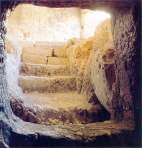
a good time to reflect on death and new life within the context of the new creation story. The chaos and seeming hopelessness of Good Friday, and the bitter cold and icy winter many have experienced, will both result in new life. It’s a cosmic pattern.

Cosmic Beginnings

When we think of Jesus’ death bringing him and us all new life, we can remember that the beginning of this death-to-life paradox can be traced back far beyond Scripture. When we start in the very beginning  — “a very good place to start,” as Julie Andrews reminded us —  we arrive at the Flaring images-1Forth (recently confirmed by John Kovac and his colleagues at the South Pole) and the subsequent formation and deaths of stars. It would have seemed unlikely that anything of substance would result from dying stars, but we know that by dying, each generation of them created more complex elements for new worlds and complex life.

Evolution continued for 13.8 billion years, always by way of some beings giving up their independent existence to create something new. Over billions of years, elements became molecules that bonded in ever more complex patterns. Major extinctions on Earth gave space
for new life forms. Created in God’s image, all of nature incarnates God’s generous. lavish, immense pouring out. Dying to live, living to die is an old, old pattern.

Plants and People
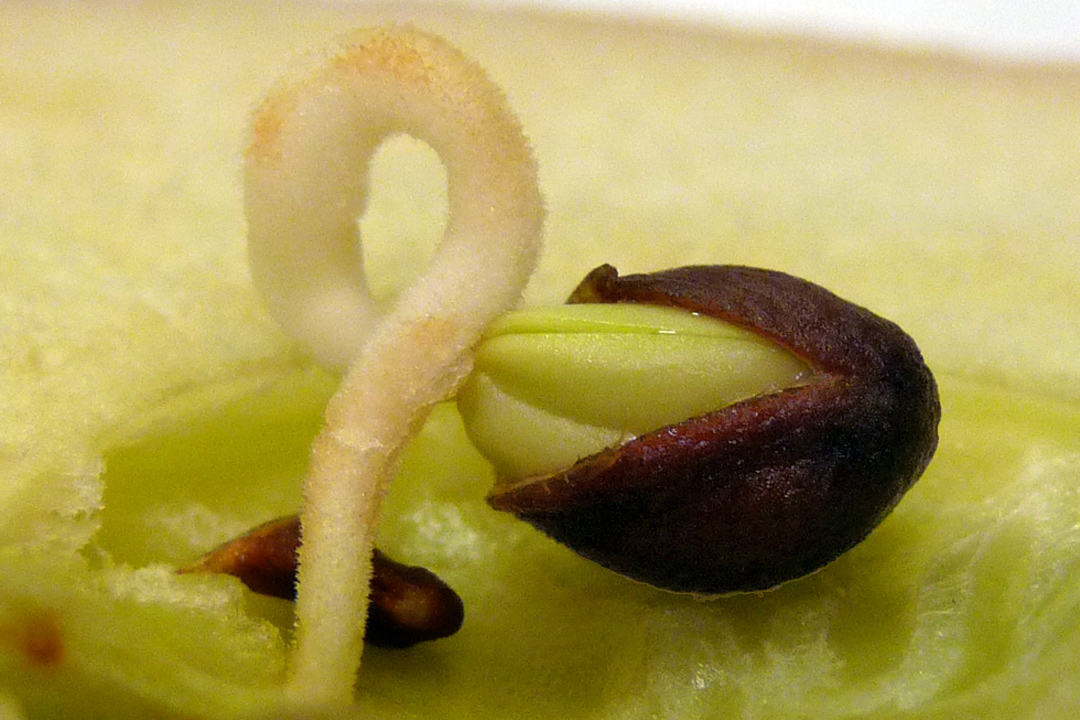
dying-seed1Death for life is obvious in plant life: Unless the grain of wheat dies, it remains just a single grain. But if it does die, it will bear much fruit (John 12:24). For a beautiful piece on regeneration of trees by coppicing (a special pruning and cutting technique that dates to the Neolithic period and that allows for continual, healthy wood harvesting from the same trees, often for centuries) see http://ncronline.org/node/73506.

In human growth and development, infancy gives way to adolescence get-attachment.aspxthat gives way to adulthood. Each moment cells die to give space/opportunity for others. David S. Toolan, SJ, writes: We regrow our entire physical body as we do hair and nails. Nothing in our genes was present a year ago. The tissue of our stomach renews itself weekly, the skin is shed monthly, and the liver regenerates every six weeks. Every moment, a portion of the body’s 10[28] atoms is returning to the world outside, and ninety-eight percent of them are replaced annually. It’s automatic!

Chosen deaths

These automatic deaths, of course, were also true for Jesus. But Jesus gave us the ultimate example of chosen self-giving throughout his life.  Jesus’ sacrifice on the cross is nothing else Evangelii-Gaudium-Imagethan the culmination of the way he lived his entire life, Pope Francis reminds us in The Joy of the Gospel. Jesus’ total self-giving so that we might have new life confirmed his participation in the fabric of creation.
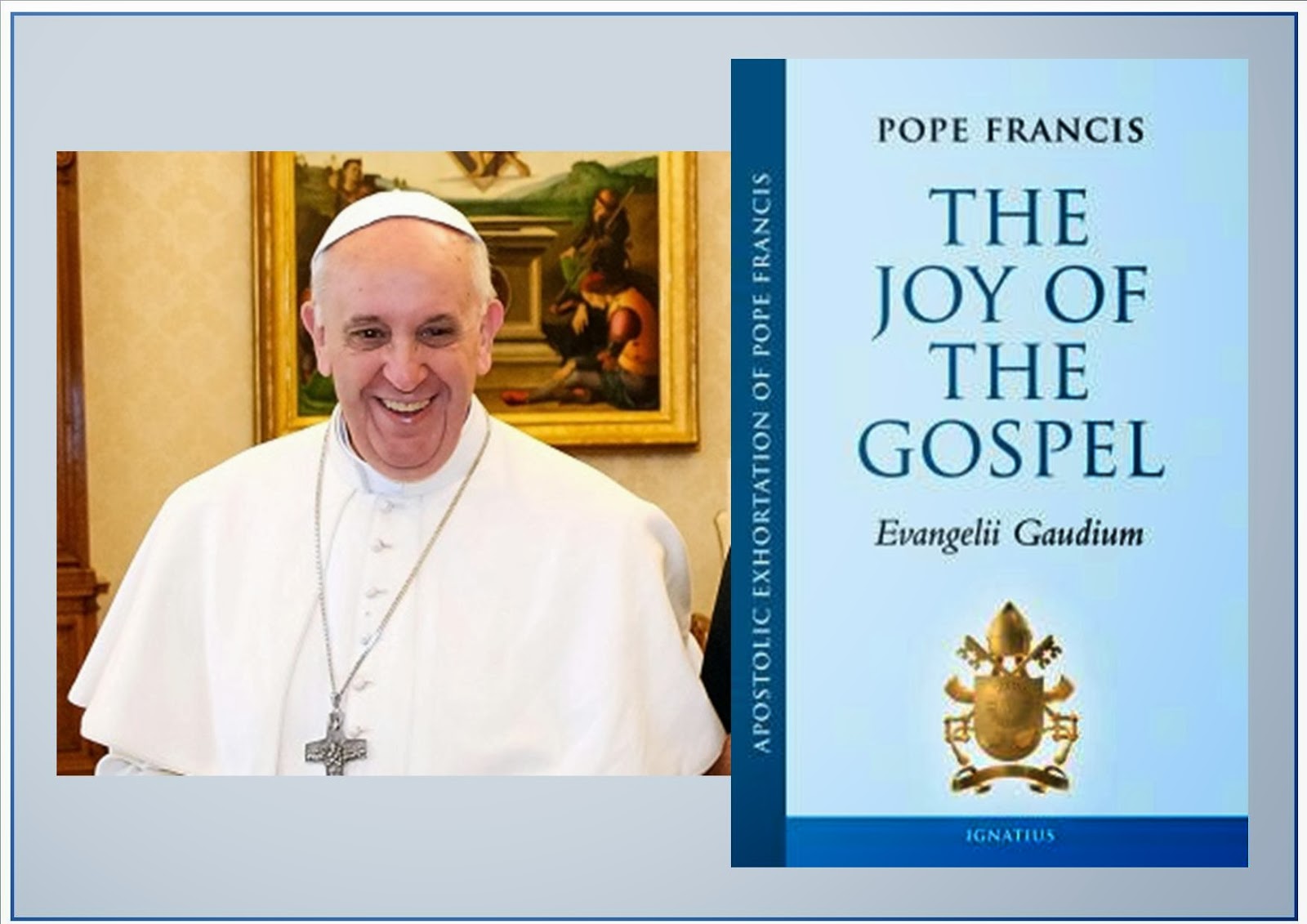
Jesus modeled for us how to live lovingly and selflessly for the good of others — with both love and justice. His life and death were obviously unique, but, like him, we who follow his life pattern have both automatic and chosen deaths.

Our Turn

We try to make the conscious deaths with love and joy, no longer, as in the past, for our small selves, for our small family, our small country; but for the salvation and the success of the universe. (Teilhard de Chardin) Aware of our interconnection with all being, we “die” to what we judge holds us (personally and globally) from abundant life – usually selfishness in some form. We can be confident that the Spirit of Life can bring new life both within and without us and all creation. We can be sure that our efforts for justice will bear fruit.

Thomas Merton recognized this principle in all religions: All mature religion must and will talk about the death of anyUnknown notion of a separate, and therefore false, self. Merton suggests we substitute the word “separate” whenever we read “sin” in the Scriptures! Try this when renewing Baptismal promises! (Do we renounce feeling separate from any part of creation, whatever the “ism”?) In Baptism the “separate self” dies so a new, more self-giving and Christlike person can grow and realize its place and responsibilities in the Christian (and unavoidably the cosmic) community.

The certainty of this pattern can give comfort when deaths are not self-chosen: those of loved relatives and friends, of physical and mental abilities, of beloved organizations . . . .

Michael Morwood writes: Everywhere we look we can observe the perpetual rhythm of new life, followed by death, followed by new life. So we do not believe that death is the final end of anything, nor is it for us the start of a journey to somewhere else. Rather, it is a transformation and a continuation of the ebb and flow of existence in ways we do not understand. 

FOOD FOR PRAYER:

How can we better follow this ancient pattern of death leading to new life in order to become more benevolent members of the Christian and of the Earth communities?

How can we more deeply root ourselves in Jesus’ story and Earth’s story?

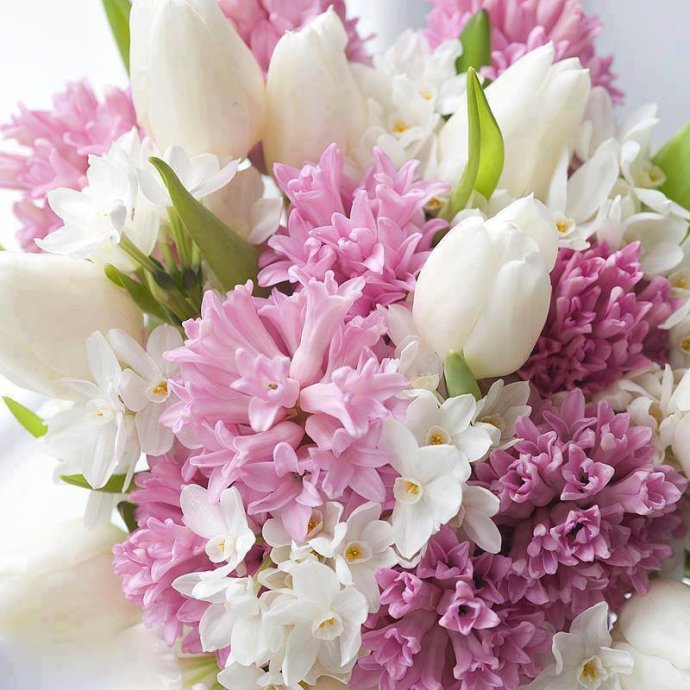
How can our choices contribute to the new life of Easter and spring?
get-attachment-3.aspx


April 2014  Nannette Manley: There is so much food for thought in these meditations. I will keep them for future reference. Thank you so much.

Stardust and Cosmic Water

images-2“Water, water everywhere,” Samuel Taylor Coleridge wrote. He didn’t know the fraction of water’s ubiquitousness!

My usual water focus includes its importance as more than a resource, important as that is. Water, in its many forms, deserves our respect for other reasons, such as these:
– It is the origin of, and requirement for, life on Earth;
– It is a revelation of the Creator; it is sacred;
– It is an essential component of life (e.g., blood) and for enriching our lives;
– It helps us  “metaphor” divinity;
– its precarious future because of climate chaos, waste, and pollution.

Those using my “I Thirst” reflection this Lent will spend time reflecting on water and how it enables and enriches our lives. Understandably, “. . . nor any drop to drink” [sic] is a mighty fearsome possibility!

Origins of Earth’s Water 

In the Genesis version (which is respected as fertile myth but not historical account),images-3 water is the “watery abyss” that’s just there. God creates sky to separate the water under and above the sky/heaven. God gathers the water into one place so that land appears. “He named the pooled water Ocean.” (Gen. 1: 10) Water, a progeny of stardust,  predominates on our planet and is one source of our unity. I want to share some things I’ve learned (primarily from The Stardust Revolution by Jacob Berkowitz) that expand my understanding of water’s being “everywhere.”

Readers might know what follows, but no matter how much we already know about water, reviewing or learning more always seems to be a source of wonder. Maybe that’s because we’re learning about our ancestry! (Berkowitz: “We’re really made up of trillions of bags of water — our cells.”) Increased wonder was certainly true for me as I delved into facts discovered since the 1920’s about water — beyond Earth. I was and am also awed that humans have figured out ways to discover these facts. It earned Nobel Prizes for several scientists, and certainly earns them my respect and gratitude.

images-4For decades I thought water on Earth was the result of steam turning to rain and deluging the land. Relatively recently, I learned that water on Earth most probably came from comets and asteroids that regularly strike Earth. I admit I didn’t think much about how water got into them.

Scientific breakthroughs

Prior to the 1920’s, people thought the Universe was dry. In 1927, scientists at Bell Labs in New Jersey accidentally tuned in to the cosmos and heard radio waves. These waves are the principle behind radar, which eventually led to experiments in locating and identifying molecules that permeate the universe, the remains of supernovas and even of the Big Bang.

It turns out that the radio wavelengths of elements emit distinct signatures; each broadcasts a particular frequency. First scientists discovered vast, diffuse clouds of hydrogen, the element that had its origin in the first flaring forth. Researchers knew that hydrogen was abundant and the basic building block of the cosmos. That hydrogen atoms were “out there” was not too amazing.

Astronomers believed that molecules could not form or survive beyond Earth. Finding molecules in the cosmos — two or more atoms bonded together to form a chemical compound — would be a “quantum leap” in the non-scientific understanding of that word. Free-floating molecules rotate, vibrate, or both. This forms a unique fingerprint, making it possible for scientists to identify – and potentially find — each chemical. And in time, scientists did find them!

By 1937 “as simple a molecule as there is,” composed of a single carbon atom joined with a single atom of hydrogen — carbon hydride — had been discovered. Ammonia, too, had been discovered. Would it be possible to discover water molecules in the cosmos?

Discovery of Cosmic Water! 

Most people know that three atoms are required to form a water images-5molecule (H2O):
2 of hydrogen, the most common element from the Big Bang, plus
1 of oxygen, the most common element formed by stars.

The very next year, 1938, Charles Townes and his research group identified this three-partner dance in the cosmos — water! I either didn’t know or didn’t care at the time. Did you, if you were born by then?

And why might one care? Well, it’s good to live in the real world. Cosmic water is part of the story of who you and I are, the story of where we live. Genesis helped us think that water was not only always part of Earth, but was uniquely here. We thought Earth had cornered the water market! Turns out we needed a major thought-revision.

images-7Our beautiful, blue, wet planet is floating in a Universe awash in water in some form, mostly very cold gas or ice.
Ice is found around new stars and old ones;
it’s near black holes as well as in the heart of galaxies;
it forms around dust grains and it is frozen in ice balls.
Astronomers have detected water vapor whose light fingerprint had traveled from 12 billion years ago, and
the amount in the Universe is staggering. 

Stardust Connections

None of this water was “just here” in the cosmos; each single water molecule was formed from stardust elements!

How could we ever comprehend the creativity, the love, the source of this? Indeed, “The heavens are telling the glory of God!” (Ps. 19:1) images-8

Many Earthlings enjoy being in or near moving water: rivers, lakes, oceans, pools, even bath tubs. We instinctively feel a unity, a peace, a renewal.

Knowledge about cosmic water and our mutual beginnings from stardust can add to our feeling united to the entire Universe!

Ice Connections

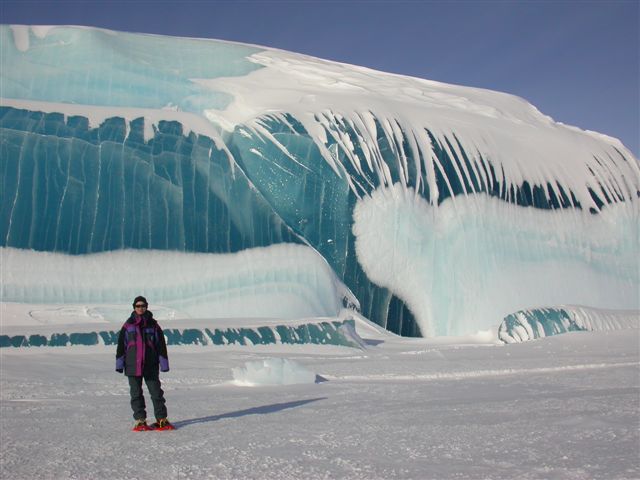
Much of the North has had a lot of ice this winter — for better and for worse. We might now feel more united with cosmic ice when we enjoy ice skating and hockey, when we are awed by ice formations, when we plop ice cubes to cool our drinks.

imagesget-attachment.aspx


Call to
Appreciation

It turns out that Earth is just one more place within the Cosmos where ice exists — and we have the awareness to appreciate it wherever it is!
Let’s deepen our appreciation of water everywhere on World Water Day March 22.
Let’s deepen it during Lent when we read stories about water and think about our sacraments.
Let’s deepen it whenever we look out at the heavens.
And, for sure, let’s deepen it by using Earth’s water reverently and sustainably.
Let’s not take it for granted!
Let’s stop individual and industrial pollution, waste, and contributions to climate change.

To adapt St. Francis’ words: Let us praise you, Lord, for Sister Water . . . .

Stardust Wednesday Ritual

We Are Stardust

Readers of this blog will be well aware that they are stardust. They might even

images-2remember when, where, and from whom they first learned that fact — or truly realized it. For many of us, the news was revolutionary. Talk about a paradigm shift!

As far as I can discover, few suspected this fact prior to 1929, when Harvard astronomer Harlow Shapley remarked that “humans are made of the same stuff as the stars.” Three decades later, scientists showed that the atoms of which we are made are not only the same as those in stars; the atoms that comprise our “stuff” were actually created inside stars! No wonder gazing at stars can have such a profound effect on us! No wonder we sometimes really feel that we are one with all creation!

Also awesome is the realization that we become star stuff by way of Earth. When Christians are asked on Ash Wednesday to remember that they are dust, they can remember the Genesis story of how God took Earth’s clay/ humus to form the first humans. They can also remember that human evolution dates back not just to the very beginnings of our Earth, but all the way back to stars!

Ash Wednesday

images-1 Traditionally, on Ash Wednesday Christians flock to Church to begin Lent by receiving a sign of the cross on their foreheads. Originally called “Day of Ashes,” this custom had begun by the 8th century. Many Scripture references, primarily in the Hebrew Scripture, tell of repentant people putting on “ashes and sackcloth.” Ashes were originally sprinkled on the head rather than marked on the forehead. The ashes are a reminder of our sinfulness and mortality; the sign of the cross reminds us of Jesus’ forgiveness of sinners.

The ashes come from the burned palms used the year before on Palm Sunday. People are usually happy to get a good black smear to prove that they appreciate the symbolism of this sacramental — even if we didn’t exactly come from ashes.

Stardust Wednesday Ritual 

The following ritual is not intended as competition for the usual Ash Wednesday practice. It is suggested as supplemental to the traditional ashes ceremony, or as an alternative for anyone who would not otherwise participate in anything. A two-sided copy of just the ritual is available from terrishcj@aol.com.

Organizer(s) and/or those participating: Adapt the following ritual in any way that will make it more useful. (Send suggestions to terrishcj@aol.com.) Decide how much to use, music, and readings. You might want to be creative with sparklers or glitter. If wanted, plan refreshments.images-6

Begin together: May the Divine Power living and acting within us deepen our wonder and appreciation of the fact that we are made of stardust!

Music: Sing or say the lyrics for “Born of a Star” from We Are the Land We Sing, Carolyn McDade: http://www.catholicmusic.us/carolyn-mcdade-cds.aspx

Born of a Star

Return
Return to the darkness, return
this longest night of wonder Return
Return to the dream, return
this holy night to ponder
Deep in the night, listen
listen
Turn to the light
waken, waken
Deep in the night turn to the light Waken to Sun’s ancient summons ~

we who are born of a star who then are we?
we who are loved by a star who then love we?

We who are born of a star who then are we?

Reading(s): (Select one or more)

• from Radical Amazement, Judy Cannato: The massive star that was mother to our Sun met with fiery death, her form completely annihilated be the explosive force of the blast. And yet she exists in each of us, in the cells of our bodies that are composed of her dust. Consciously or not, we carry her within us as surely as we carry the DNA of our biological parents [and ancestors].

• from The Cosmic Dance, Joyce Rupp: Our planet Earth was once a dancing star, evolving over four and a half billion years ago from the many elements of a colliding supernova. I have loved knowing that we are “made of stardust” as Brian Swimme and other poetic cosmologists tell us. I like knowing that the composition of my body has the elements of a star that was once brilliantly aglow in the universe and is now dancing in me. There’s a magical sense of connection that comes from this knowledge . . . .

• from Once Upon a Universe, Pat Bergen, CSJ/Ministry of the Arts: When our Milky Way was 5 billion years old, a [later] generation star was coming to the end of her life. This grand old star collapsed in on herself and then exploded in a blast as fierce and brilliant as a million stars. It was our grandmother supernova! Her death gave birth to hundreds of new, more complex elements — carbon, iron, calcium, oxygen, magnesium . . .  “stardust” flung far out into space. Gravity again went to work and drew the dust back into a hot, dense center. And voila! Our glorious Sun star ignited! The rest of the stardust gathered into 8 fiery planets of molten rock and gases, dancing with their moons in orbits around the Sun. Thus were born [what became] our home planet Earth, our moon, our great generous Sun, . . . our whole solar system.

 Quiet Reflection

 Sharing: What connection(s) do you find between this story and the stories of Jesus that we ponder during Lent and Easter?

 Intentions: Reply is “We are grateful.”
– for the Spirit present within the creative process of creation and within each of us, We are grateful.
– for the generations of supernovas that exploded, resulting in stars with increasingly heavier elements, eventually leading to the supernova that resulted in our solar system and galaxy,
– for Sister Dirt, because of whom we can enjoy food, flowers, plants clean air, shade, and revelations of the divine,
– for farmers who till the soil, especially our local farmers who do it organically using fair trade practices,
– for the scientists, theologians, thinkers, writers, speakers and artists who have helped us realize our place in creation — [Pause to quietly remember one or two who have helped you. Name them if you wish],
– for those present and throughout the world committed to creating a flourishing Earth,

 Blessing: Join in 2’s or 3’s. Allow a few moments for people to think of a prayer for their partner(s). Then, in turn, each extends hands over (or on) the other’s head and says a blessing, wish, or thanksgiving. (E.g., John, may God’s loving Spirit deepen our awareness that all creation is one. Pat, thank you for bringing your starlight into my life. Al, I bless you and the star-stuff you invest in caring for creation.)

 Socializeimages-3