DID NOT THE CHRIST HAVE TO DIE?
(Luke 24:26)
Lent is transitioning in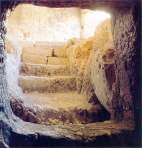 to Holy Week and Easter — with Earth Day very soon thereafter —
a good time to reflect on death and new life within the context of the new creation story. The chaos and seeming hopelessness of Good Friday, and the bitter cold and icy winter many have experienced, will both result in new life. It’s a cosmic pattern.
Cosmic Beginnings
When we think of Jesus’ death bringing him and us all new life, we can remember that the beginning of this death-to-life paradox can be traced back far beyond Scripture. When we start in the very beginning — “a very good place to start,” as Julie Andrews reminded us — we arrive at the Flaring  Forth (recently confirmed by John Kovac and his colleagues at the South Pole) and the subsequent formation and deaths of stars. It would have seemed unlikely that anything of substance would result from dying stars, but we know that by dying, each generation of them created more complex elements for new worlds and complex life.
Evolution continued for 13.8 billion years, always by way of some beings giving up their independent existence to create something new. Over billions of years, elements became molecules that bonded in ever more complex patterns. Major extinctions on Earth gave space
for new life forms. Created in God’s image, all of nature incarnates God’s generous. lavish, immense pouring out. Dying to live, living to die is an old, old pattern.
Plants and People
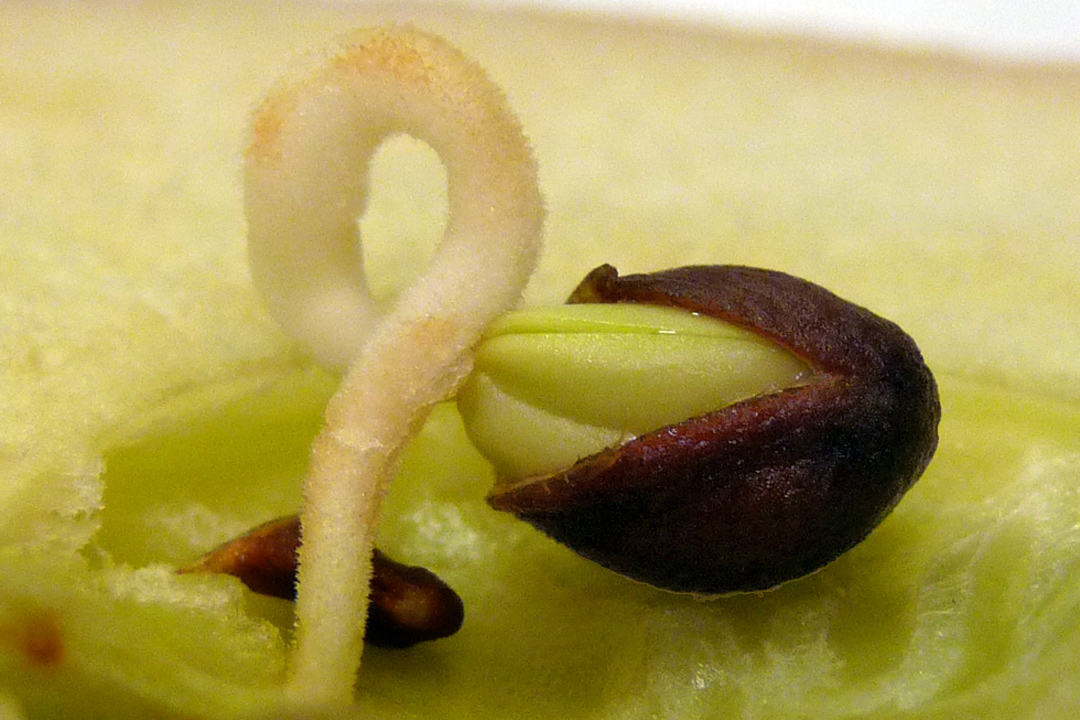 Death for life is obvious in plant life: Unless the grain of wheat dies, it remains just a single grain. But if it does die, it will bear much fruit (John 12:24). For a beautiful piece on regeneration of trees by coppicing (a special pruning and cutting technique that dates to the Neolithic period and that allows for continual, healthy wood harvesting from the same trees, often for centuries) see http://ncronline.org/node/73506.
In human growth and development, infancy gives way to adolescence  that gives way to adulthood. Each moment cells die to give space/opportunity for others. David S. Toolan, SJ, writes: We regrow our entire physical body as we do hair and nails. Nothing in our genes was present a year ago. The tissue of our stomach renews itself weekly, the skin is shed monthly, and the liver regenerates every six weeks. Every moment, a portion of the body’s 10[28] atoms is returning to the world outside, and ninety-eight percent of them are replaced annually. It’s automatic!
Chosen deaths
These automatic deaths, of course, were also true for Jesus. But Jesus gave us the ultimate example of chosen self-giving throughout his life. Jesus’ sacrifice on the cross is nothing else 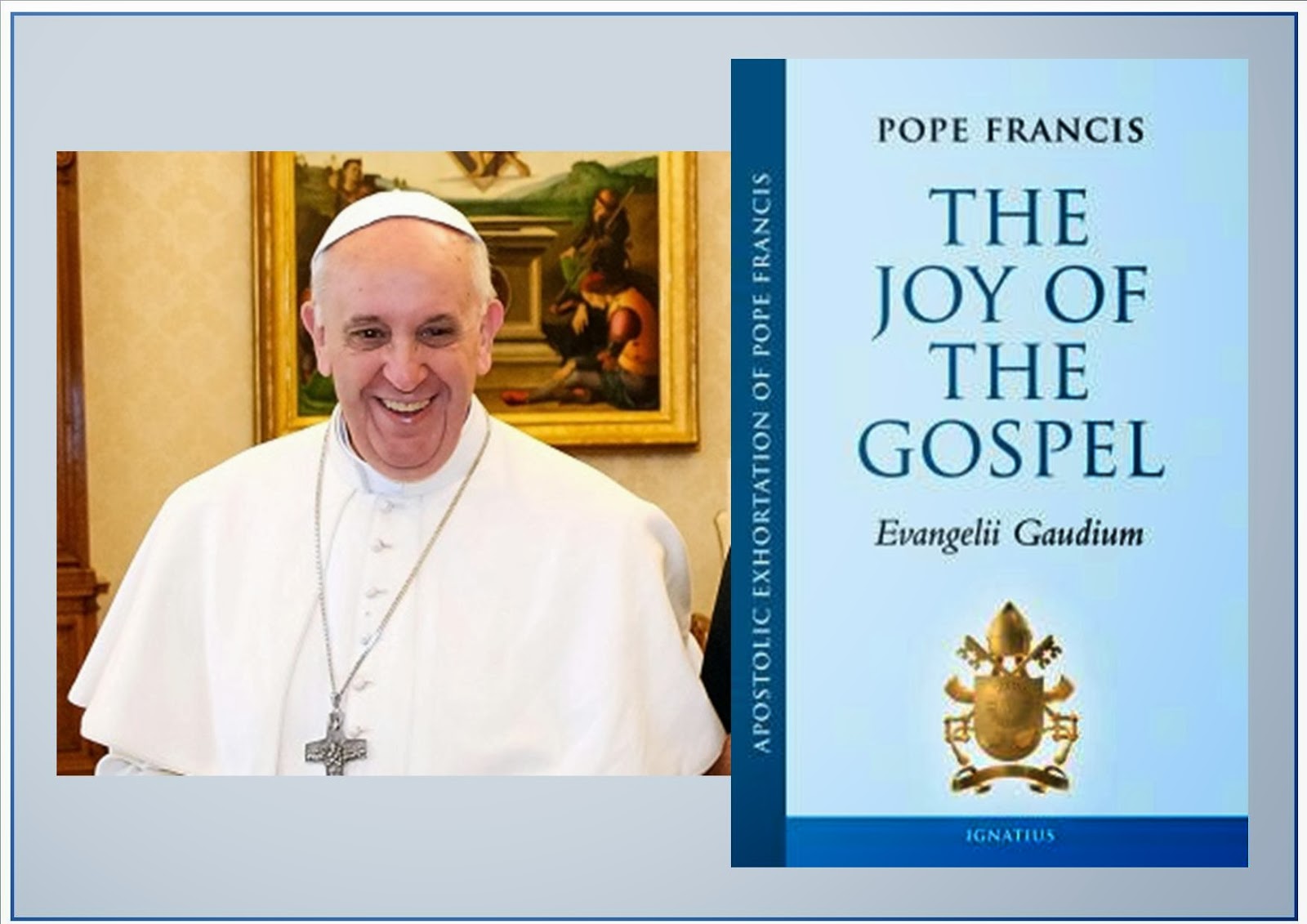 than the culmination of the way he lived his entire life, Pope Francis reminds us in The Joy of the Gospel. Jesus’ total self-giving so that we might have new life confirmed his participation in the fabric of creation.
Jesus modeled for us how to live lovingly and selflessly for the good of others — with both love and justice. His life and death were obviously unique, but, like him, we who follow his life pattern have both automatic and chosen deaths.
Our Turn
We try to make the conscious deaths with love and joy, no longer, as in the past, for our small selves, for our small family, our small country; but for the salvation and the success of the universe. (Teilhard de Chardin) Aware of our interconnection with all being, we “die” to what we judge holds us (personally and globally) from abundant life – usually selfishness in some form. We can be confident that the Spirit of Life can bring new life both within and without us and all creation. We can be sure that our efforts for justice will bear fruit.
Thomas Merton recognized this principle in all religions: All mature religion must and will talk about the death of any notion of a separate, and therefore false, self. Merton suggests we substitute the word “separate” whenever we read “sin” in the Scriptures! Try this when renewing Baptismal promises! (Do we renounce feeling separate from any part of creation, whatever the “ism”?) In Baptism the “separate self” dies so a new, more self-giving and Christlike person can grow and realize its place and responsibilities in the Christian (and unavoidably the cosmic) community.
The certainty of this pattern can give comfort when deaths are not self-chosen: those of loved relatives and friends, of physical and mental abilities, of beloved organizations . . . .
Michael Morwood writes: Everywhere we look we can observe the perpetual rhythm of new life, followed by death, followed by new life. So we do not believe that death is the final end of anything, nor is it for us the start of a journey to somewhere else. Rather, it is a transformation and a continuation of the ebb and flow of existence in ways we do not understand.
FOOD FOR PRAYER:
How can we better follow this ancient pattern of death leading to new life in order to become more benevolent members of the Christian and of the Earth communities?
How can we more deeply root ourselves in Jesus’ story and Earth’s story?
How can our choices contribute to the new life of Easter and spring?

April 2014 Nannette Manley: There is so much food for thought in these meditations. I will keep them for future reference. Thank you so much.


 ecospirituality resources