Paths to Christmas Peace

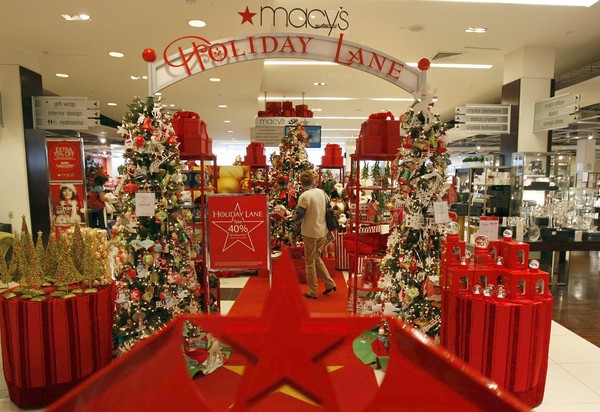
Mid-September I met a friend in a major department store in Chicago. Although it was over a month before Hallowe’en and two months before Thanksgiving, it was already festooned with, and was selling, Christmas items!

If stores were in Christmas mode then, it is not too soon for me to post about the spiritual preparations for Christmas that the Christian tradition calls “Advent,” from the Latin ad (to) venire (come). 

Advent resource focusing on Peace

Each year I offer a resource to help individuals and groups prepare for Christmas by placing the mystery of Incarnation (made into flesh) within the universe story and current realities. This year my Advent resource is “Paths to Peace.” The blurb on my Advent Resources site lists it as follows:

Advent.2018.Paths.to.Peace – 12 sides

Explore the meaning of peace in the light of justice and whole-making; the inner journey and consciousness; obstacles to inner and outer (world-wide) peace; and a final reflection on Mary and Eucharist. An additional page focuses on the obstacles to inner and outer peace created by current weaponry. Each week includes excerpts from the Sunday liturgical readings, times of silence, awareness of divinity living and acting within us and our world, and suggestions for the week. Useful for individuals but designed for groups.

This resource is available free at Advent.2018.Paths.to.Peace.

Pertinent dates before Advent related to arms, violence, and the unity that prevents war

October: Domestic Violence Awareness Month, recognizing the need to collaborate in solving both sexual assault and domestic violence. 

Oct. 12: Indigenous Peoples’ Day, replacing Columbus Day (celebrated Oct. 8)

Oct. 24: UN Day and Global Oneness Day

Oct. 24-30: Disarmament Week 

Nov. 6: International Day for Preventing the Exploitation of the Environment in War and Armed Conflict

Nov. 25: International Day for the Elimination of Violence against Women

Nov. 30: International Remembrance Day for Lost Species (cf. past grieving blogs)

Dec. 3: First Sunday of Advent 

Recommended resource

Did you know that Megan Rice, SHCJ, has been called “the biggest threat to our nuclear arms stockpile”? The following 15 min. interview with Megan shows her awareness of the threats of nuclear stockpiles, her total commitment to reducing them, and yet her ability to remain peaceful and respectful. Thanks for your actions for, and your example of, peace, Megan!

http://www.unabridgedpress.com/the-biggest-threat-to-our-nuclear-arms-stockpile-a-nun/

Suggested Action

The U.S. Constitution gives Congress the sole and exclusive authority to declare war. Send a message to your senators asking them to co-sponsor S.3517, legislation that limits funding for active military operations in or against Iran. A few clicks can help to stop a war with Iran.

St. Francis Prayer Service, 2018: Who Is My Neighbor?

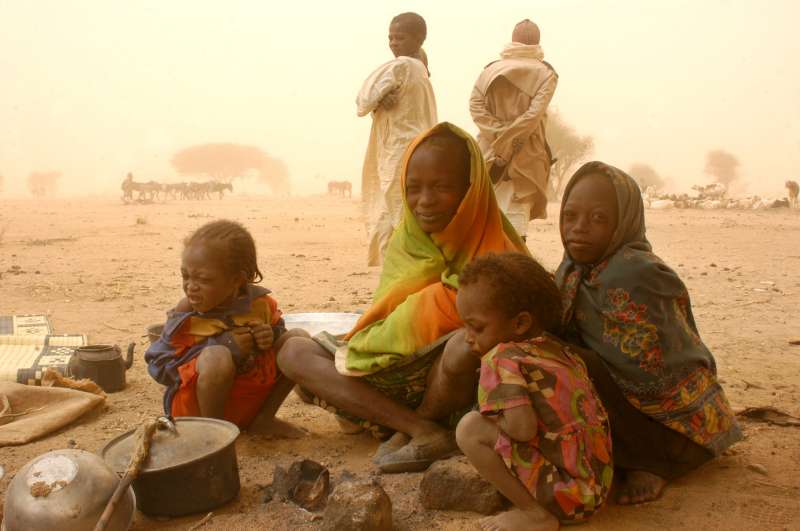
St. Francis of Assisi, the patron saint of ecology, is also famous for his concern for peace and his devotion to people suffering from poverty and injustice. Catholic Climate Covenant (CCC)’s theme for his feast day this year joins all of them: “Who Is My Neighbor in a Climate Threatened World?” It especially focuses on the interconnections among immigration, refugees, and climate change.

Many past blogs have stressed these problems, their interrelationships, and our place in the cosmos’ evolution. I feel no need to “convince” readers. Instead, I offer the outline of a brief prayer service that you can adapt in any way:

                                                                            Prayer Service

Leader: Let us join together to honor St. Francis, to remember the needs of our own times that Frances would surely care about, and ponder how his spirit and commitment can lead us to action. Laudato Si’ is permeated with St. Francis’ spirit; Pope Francis mentions it in the first paragraph of his 2015 encyclical: “St. Francis reminds us that our common home is like a sister with whom we share our life and a beautiful mother who opens her arms to embrace us.” (par. 1) 

Take turns reading from Laudato Si’:

“Authentic human development … presumes full respect for the human person, but it must also be concerned for the world around us and ‘take into account the nature of each being and of its mutual connection in an ordered system.’ Accordingly, our human ability to transform reality must proceed in line with God’s original gift of all that is.” (par. 5)

“There has been a tragic rise in the number of migrants seeking to flee from the growing poverty caused by environmental degradation.” (par. 25)

“There is an urgent need to develop policies so that, in the next few years, the emission of carbon dioxide and other highly polluting gases can be drastically reduced, for example, substituting for fossil fuels and developing sources of renewable energy.” (par. 26)

“…everything is interconnected, and today’s problems call for a vision capable of taking into account every aspect of the global crisis….” (par. 137) 

“… we are not disconnected from the rest of creatures, but joined in a splendid universal communion.” (par. 220)

“The poor and the earth are crying out.” (par. 246)

Share

How do you see climate change, immigration, and refugees as interconnected issues?

Imagine you are the head of a family forced to leave homeland due to flooding, drought, or lack of food in order to find housing and sustenance elsewhere. How would you feel? What would you miss?

Watch this 3:33 min. video

Links between migration and climate changeYouTube
http://www.youtube.com/watch?v=VQslOVboFfU

Decide

How might each person here, or this group together, improve the situation for immigrants, refugees, and climate change this week? We CAN make a difference!

Together: Prayer for Creation and Migrants 

May the Holy Family, who, Scripture tells us, fled to another country for safety, guide all those forced to leave their homes. 

May St. Francis’ example of giving what he had to those in need inspire us to respond generously when so many must leave everything due to climate disasters. 

May our own sense of interconnection with people and the entire planet bring us to take political action in this time of denial and rejection of climate change and migrating families.

May future generations have reason to be grateful to us for what we do, now, to stop the causes of migration, immigration, and climate change.     Amen.

Sing

Make me a channel of your peace.
Where there is hatred let me bring your love,
Where there is injury, your pardon Lord
And where there’s doubt true faith in You.

Make me a channel of your peace.
Where there’s despair in life let me bring hope,
Where there is darkness only light,
And where there’s sadness ever joy.

Oh, Master, grant that I may never seek
So much to be consoled as to console
To be understood as to understand
To be loved as to love with all my soul.

Make me a channel of your peace.
It is in pardoning that we are pardoned,
In giving of ourselves that we receive,
And in dying that we’re born to eternal life

Season of Creation, cont.

I am grateful to Betsey Crawford for permitting me to use her inspiring blog, “The season of creation,” which follows. I am always awed by the beauty of images and words Betsey shares, and I encourage readers to visit her site: www.thesouloftheearth.com.

My limited computer expertise forced me to reformat, but the content is accurate. When giving permission, Betsey added, “Be sure to mention that it was you who launched me on this tradition two years ago.” I don’t remember that, but am delighted to claim any connection to Betsey’s tradition.

                                The season of creation

Celebrating the Season of Creation: western red columbine and seedhead (Aquilegia formosa) Valdez, Alaska by Betsey Crawford

For the past two years, I’ve celebrated September 1, the World Day of Prayer for the Care of Creation, with a collection of quotes from Pope Francis’s 2015 encyclical, Laudate Si. It was he who launched the day in 2016, joining a tradition started by the Orthodox Church in 1989. This has grown into the Season of Creation, which extends from September 1, the first day of the Orthodox year, to October 4, the birthday of Francis of Assisi, whose devotion to the wonders of the earth inspired not only Pope Francis’ choice of name, but also the title of his encyclical. Laudate si — Praise be!    are the opening words of each of the verses in Francis’ beautiful Canticle to the Sun.

This particular Season of Creation is jumping. Whether affiliated or not, there are events happening all over the world. Especially here in California, where, in response to the current scene in Washington, Governor Jerry Brown called for a Global Climate Action Summit, to be held in San Francisco from September 12 through 14. The part that Brown himself is involved in includes people from governments, NGOs, and businesses all over the world. By and large, those sessions are closed to the public. All other groups were invited to create events and participate in whatever way they wished.

That’s all Californians needed to hear. On Tuesday, the day before the summit even starts, there are 77 separate listed events, mostly near San Francisco, not counting ongoing exhibits and the Green Film Festival. On top of listed events, groups are gathering to protest, march, perform ceremony, dance, and make music. Young people and indigenous people want to make the point that those governments and corporations behind the closed doors have, so far, been the creators, not the solvers, of global warming.

Supporting rallies are happening all over the world on September 8, as you can see from this map from The Action Network. New York is having Climate Week NYC from September 24 to 30. There is a conference in Rome in October. My friends at the Pachamama Alliance have created the Stand Up in September campaign, and are hosting special events in the US, South America, Australia, Europe and Japan. Even in your own home, where you can receive an action to take to reverse global warming every day for the month of September by signing up here.

I’ll be part of a Pachamama team teaching a Drawdown workshop starting in September, and will certainly go to some of the events around the summit. For today, I’d like to follow my now three-year-old tradition, and celebrate the beauty we are trying to save and the wisdom we can turn to. This year I’ve interwoven Pope Francis’ words with those from our other prayerful traditions.

Celebrating the Season of Creation: pronghorn antelope (Antilocapra americana) in the Pawnee National Grasslands by Betsey Crawford

Pronghorn antelope (Antilocapra americana) in the Pawnee National Grasslands

We shall awaken from our dullness and rise vigorously toward justice. If we fall in love with creation deeper and deeper, we will respond to its endangerment with passion.
(Hildegard of Bingen)

Celebrating the Season of Creation: prairie thistle (Cirsium discolor) with pollinating bee, Curtis Prairie, Madison, Wisconsin by Betsey Crawford

Prairie thistle (Cirsium discolor) with pollinating bee, Curtis Prairie, Madison, Wisconsin

It is not enough…to think of different species merely as potential ‘resources’ to be exploited, while overlooking the fact that they have value in themselves. Each year sees the disappearance of thousands of plant and animal species which we will never know, which our children will never see, because they have been lost for ever. The great majority become extinct for reasons related to human activity. Because of us, thousands of species will no longer…convey their message to us. We have no such right.
(Pope Francis, Laudate Si)

Celebrating the Season of Creation: a road through the Pawnee National Grasslands by Betsey Crawford

The Pawnee National Grasslands

Because of all the complexities of its tectonic activity and its distance to Sun and Moon and other planets in the solar system, each region of Earth needs to be understood in its own evolutionary terms. Each region’s landforms, waters, climates and evolving communities of life are unique and highly vulnerable to the human societies which reside there, often without this prior understanding to temper the raw force of their technologies.  (Sister Miriam MacGillis in Kosmos) 

Celebrating the Season of Creation: black-footed reindeer lichen (Cladonia stymie) with snow lichen (Flavocentria invalid) in Denali National Park, Alaska by Betsey Crawford

Black-footed reindeer lichen (Cladonia stymie) with snow lichen (Flavocentria invalid) in Denali National Park, Alaska

It may well disturb us to learn of the extinction of mammals or birds, since they are more visible. But the good functioning of ecosystems also requires fungi, algae, worms, insects, reptiles and an innumerable variety of microorganisms. Some less numerous species, although generally unseen, nonetheless play a critical role in maintaining the equilibrium of a particular place.   (Pope Francis, Laudate Si)

Celebrating the Season of Creation: common buckeye (Junonia coenia) Golden Prairie, Golden City, Missouri by Betsey Crawford

Common buckeye (Junonia coenia) Golden Prairie, Golden City, Missouri

However innumerable beings are, I vow to save them.
(The first of
 the Four Vows of the
Mahajana Bodhisattva)

Celebrating the Season of Creation: canyon pea (Lathyrus vestiges) Charmlee Wilderness, Santa Monica Mountains, California by Betsey Crawford

Canyon pea (Lathyrus vestiges) Charmlee Wilderness, Santa Monica Mountains, California

People usually consider walking on water or in thin air a miracle. But I think the real miracle is not to walk either on water or in thin air, but to walk on earth. Every day we are engaged in a miracle which we don’t even recognize: a blue sky, white clouds, green leaves, the black, curious eyes of a child–our own two eyes. All is a miracle.
(Thich Nhat Hanh, The Miracle of Mindfulness) 

 Celebrating the Season of Creation: tall purple fleabane (Erigeron peregrinus) on the Stanley Glacier trail in Kootenay, British Columbia by Betsey Crawford

Tall purple fleabane (Erigeron peregrinus) on the Stanley Glacier trail in Kootenay, British Columbia

If we could see the miracle of a single flower clearly, our whole life would change.   (Buddha)

Celebrating the Season of Creation: Matanuska Glacier, Alaska by Betsey Crawford

Matanuska Glacier, Alaska

Our ancestors have left us a world rich in its natural resources and capable of fulfilling our needs…We are the generation with the awareness of a great danger. We are the ones with the responsibility and the ability to take steps of concrete action before it is too late.   (Dalai Lama)

Celebrating the Season of Creation: frost aster (Aster pilosus) Curtis Prairie, Madison, Wisconsin by Betsey Crawford

Frost aster (Aster pilosus) Curtis Prairie, Madison, Wisconsin

We were not meant to be inundated by cement, asphalt, glass and metal, and deprived of physical contact with nature.   (Pope Francis, Laudate Si)

Celebrating the Season of Creation: indian grass (Sorghastrum nutans) Curtis Prairie, Madison, Wisconsin by Betsey Crawford

Indian grass (Sorghastrum nutans) Curtis Prairie, Madison, Wisconsin

Ahimsa means more than not hurting others, it means not intending to cause harm, physical, mental or spiritual, to any part of nature, for, in the words of Mahavira: ‘You are that which you wish to harm.’   (Jain statement on ecology)

Celebrating the Season of Creation: a hawk in flight in the Pawnee National Grasslands by Betsey Crawford

The Pawnee National Grasslands

There is no animal on the earth, nor any bird that wings its flight, but is a community like you.   (Qur’an 6: 38) 

Celebrating the Season of Creation: human and gull footprints on the beach in Kenai, Alaska by Betsey Crawford

Footprints on the beach in Kenai, Alaska

It cannot be emphasized enough how everything is interconnected. Time and space are not independent of one another, and not even atoms or subatomic particles can be considered in isolation. Just as the different aspects of the planet – physical, chemical and biological – are interrelated, so too living species are part of a network which we will never fully explore and understand. A good part of our genetic code is shared by many living beings. It follows that the fragmentation of knowledge and the isolation of bits of information can actually become a form of ignorance, unless they are integrated into a broader vision of reality.
(Pope Francis, Laudate Si)

There is nothing superfluous in the universe. Even flies, gnats, and mosquitoes are part of creation and, as such, serve a divinely-appointed purpose.
(Midrash: Bereshis Rabba 10:7) 

Celebrating the Season of Creation: Waterton Lakes National Park, Alberta, Canada by Betsey Crawford

Waterton Lakes National Park, Alberta, Canada

If these issues are courageously faced, we are led inexorably to ask other pointed questions: What is the purpose of our life in this world? Why are we here? What is the goal of our work and all our efforts? What need does the earth have of us? It is no longer enough, then, simply to state that we should be concerned for future generations. We need to see that what is at stake is our own dignity. Leaving an inhabitable planet to future generations is, first and foremost, up to us. The issue is one which dramatically affects us, for it has to do with the ultimate meaning of our earthly sojourn.
Pope Francis, (Laudate Si)

Onshore wind farms are the number two Drawdown solution. Photo by Betsey Crawford

Windmills near Barlow, California

If you believe that it is possible to damage, believe that it is possible to repair.   (Rabbi Nachman of Breslov)