Extinction Grieving Prayer 2020

WHY NOVEMBER?

In November, religious traditions and international observances call our attention to deaths, extinctions, and thanksgiving for what remains.

For Catholics, November begins with days devoted to deceased members of our immediate and global family. We remember them all month, including the increasing numbers of men and women who have been murdered for their work preserving our common home.

It is also Native American Heritage Month, a good time to remember Native Americans’ unjust deaths, and the deaths of their cultures, languages, and religions. We strive to stop the current efforts to eliminate their sacred heritage burial grounds, plants and wildlife, and vital watersheds.

November 11th is Veterans Day in many countries. We remember the men and women who gave their lives for their countries.

In the United States, on Thanksgiving we give thanks for all of nature’s gifts. We remember those who have less.

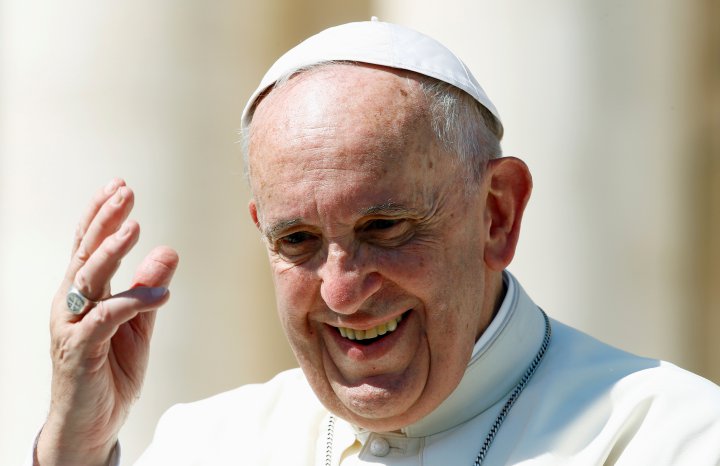
November ends with the International Remembrance Day for Lost Species (Nov. 30). Pope Francis calls us to be people “joined … so closely to the world around us that we can feel the … extinction of a species as a painful disfigurement.” Some dismiss the loss of one species, forgetting that all life is interconnected because we all began with the first flaring forth and we are now interconnected by invisible atoms. As Thomas Berry said: “Nothing is itself without everything else.”

It is important to grieve with others (in person, virtually, or in spirit) on or near November 30. The following prayer ritual can be used on any day, alone or with others. Alter it in any way that will help you (and others) grieve and be motivated to stop extinctions and the many deaths that result from the loss of species.

~~~~

EXTINCTION GRIEVING PRAYER

Use two candles; prepare suggested (or other) music and video. 

CALL TO PRAYERsparrow-dusky_seaside_sparrow-from-wikipedia

. . .today, the dusky seaside sparrow
became extinct. It may never be as famous
as the pterodactyl [ˌterəˈdakt(ə)l] or the dodo,
but the last one died today . . . .
An excerpt from “Science” by Alison Hawthorne Deming

What you call resources, we call our relatives. Source unknown.

Don’t ever apologize for crying for the trees burning in the Amazon or over the waters polluted from mines in the Rockies. Don’t apologize for the sorrow, grief, and rage you feel. It is a measure of your humanity and your maturity. It is a measure of your open heart, and as your heart breaks open there will be room for the world to heal.
An excerpt from World as Lover, World as Self by Joanna Macy

Light the first candle. It honors all the species that have gone extinct in our lifetimes.

Great Giver of Life, we pause to remember our place at the beginning of the Sixth Great Extinction on Planet Earth. For 13.8 billion years creation has been groaning: bringing to birth, becoming more complex, more organized, more conscious. The other great extinctions during the past 450 million years happened by forces beyond anyone’s control. For the first time, our species is ruining whole ecosystems, aborting entire interdependent species. We acknowledge that we play a part in this dying by our carelessness, ignorance, and indifference. Forgive us our part in the death of healthy ecosystems and the resulting extinction of creatures in whom we believe divinity lives and acts.

WATCH a short video showing facts about species decline: https://admin.zsl.org/science/news/landmark-report-shows-global-wildlife-populations- on-course-to-decline-by-67-per-cent

LITANY OF AFFIRMATION

imagesWe affirm the Sacred Mystery that caused and continues Creation.

We affirm the 13.8 billion years of our Universe.

We affirm the billions of galaxies, each with its billions of solar systems and stars.

We affirm the multiple transformations during the 4.5 billion years of Mother Earth’s life so far, and the potential for evolution towards ever-greater consciousness.

We affirm the millions of species that have inhabited our planet in beautifully-webbed communities: microorganisms, plants, fish, birds, mammals . . . .

We affirm that we came from Earth and exist, like all species, in a communion of subjects.

LITANY OF GRIEF

We grieve humans’ lack of awareness of, and concern about, the destruction of interdependent communities that have taken billions of years to develop.

We grieve the climate disasters that extinguish habitats and the multiple species within them.

We grieve the more than one-in-four flowering plants, the one-in-five mammals, the nearly one-in-three amphibians, and the one-in-eight birds that are vulnerable to being wiped out completely. (International Union for the Conservation of Nature)img_18-tm

We grieve the Golden Toad (pictured here), native to Costa Rica. It has not been seen since 1989, when a single male was found, the last of its species.

ibex1-tmWe grieve the Pyrenean Ibex (pictured here). The last of this species naturally born was a female, Celia, who died in 2000.

We grieve the St. Helena Olive, images-1a small spreading tree, the last of which perished in 2003 primarily due to deforestation and invasive plants.

We grieve all our extinct brother and sister species, the amphibians, fish, birds, mammals, plants and trees, and their diminished habitats.

We grieve the humans whose sustenance and livelihoods are threatened by this disruption in the food web.

We grieve the deaths of ecological martyrs: Sister Dorothy Stang, Dian Fossey, Chico Mendes, Berta Cáceres, and the over 1000 other activists slain since 2004. We grieve those who, like the Water Protectors at Standing Rock, are harassed and injured by police and the companies they oppose. (Global Witness reports that, on average, two people die every week.)

LISTEN TO or SING:

“Where Have All the Flowers Gone?” Note v. 2 and 3: species, workers.  (Joan Baez’: http://www.youtube.com/watch?v=0LZ2R2zW2Yc. 2:44)

* Extinguish first candle. Light second candle. It honors the threatened species that remain and our desire to protect them. 

QUIET REFLECTION: 
For believers, our faith is tested by our concern and care for creation. U. S. Catholic Bishops: “Renewing the Earth” 1991
Let us not leave in our wake a swath of destruction and death which will affect our own lives and those of future generations.  Pope Francis

 WATCH: Google either one:

YouTube: How Wolves Changed Rivers (4:33)
YouTube: The Wolves That Changed Rivers (5:47)

LITANY of GRATITUDE and HOPE 

We are grateful that the ever-controversial Endangered Species Act (ESA, U.S.) has indeed saved many species under its  protection. One example among many is the bald eagle, once threatened as a direct result of the use of DDT.

We are grateful that the Zoological Society of London released its list of birds most at risk of extinction based on evolutionary distinctness and global endangerment (EDGE). This information will help conservationists decide where efforts should focus first.
ys-wolf-releasing-sawtooth-pup_npsjimpeaco_680-612x353We are grateful that the American grey wolves, virtually extinct in the Lower 48 States by the 1930s, are now so abundant that many want their population lessened to protect cattle-raising.

We are grateful for all of the habitats that have been saved so that the interdependent species within them can escape extinction.

We are grateful for the many people throughout the world who dedicate their time and efforts to keeping habitats and species alive so they can give praise to their creator by their distinct lineages, attributes, and contributions to the web of life.

ACTION SUGGESTIONS: 

To save species, we must save ecosystems. To save ecosystems, we must reduce climate change, pollution, poaching, invasive species, and over-consumption. On the following action list, mentally check the things that you already do to protect species (which includes our own, the human species). Note anything you could add to your endeavors.

  • – Include Earth-care concerns when choosing legislators.
    – Lobby for laws to protect habitats and species.
    – Join (or cooperate with) groups working to conserve, restore and protect habitats and species.
    – Transition to renewable energy sources.
    – Encourage institutions to invest in renewable energy and to divest from fossil fuels.
    – Buy local and organic produce.
    – Carry water in a thermos (not bottled water).
    – Plant trees and support groups that do.

DISCUSS:

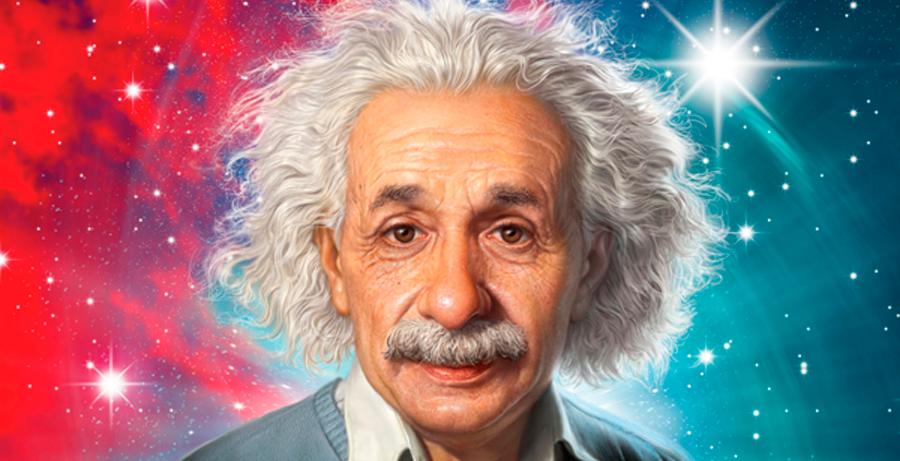
Einstein said: Imagination is more important than knowledge. Knowledge points to all that is. Imagination points to all that could be.  

What kind of Earth “could be”? How can we contribute to co-creating it?

PRAYER:

Great Giver of Life, we come from, and we dwell in, the magnificent world in which you live and act. Our species is causing extinctions; our species can prevent them. Let us not be thwarted by the immensity of the challenge, for the Power working within us can do more than we could imagine. May the flame of this candle we now extinguish continue to burn in our hearts, reminding us to help our threatened relatives.

* Extinguish second candle.

Enlighten us to find you in all Creation; empower us to treat it accordingly. Through Jesus Christ, whose respect for Earth inspires us to live as he did. Amen.

SHARE

a sign of hope with one another.

SING:

“The Heavens Are Telling the Glory of God” or “Touch the Earth” (Kathy Sherman, CSJ) or another appropriate song

Learning from Nones

Though many have been taught by “nuns” (the unofficial term for religious sisters*), I suggest that we can also learn from “nones” (the category of people who do not choose an official denomination). 

The number of nones increases each year. According to National Geographic, in 2016, “Nones are the second largest religious group in North America and most of Europe. In the United States, nones make up almost a quarter of the population. In the past decade, U.S. nones have overtaken Catholics, mainline protestants [sic], and all followers of non-Christian faiths.” (Christianity is still the largest group in the U.S., but not all faithful church-goers believe every word of dogma and tradition.

These facts can cause anxiety and bewilderment for some religious people and groups, but I believe they offer us opportunities — such as those implied in a recent statement by the Presbyterian Church (USA). Following its strong “Affirmation of Creation,” they write:  

“Among the reasons given by teens and young adults for their dissociation from churches were that ‘churches are out of step with the scientific world we live in’ (29%) and ‘Christianity is anti-science’ (25%).” While affirming science, the statement does not hide from this fact: “Yet these same scientific discoveries also challenge traditional ways of thinking about God, God’s creation, and God’s creative activity.”  

The statement continues: “In 1947 the Jesuit paleontologist Pierre Teilhard de Chardin described this challenge. When we speak of a ‘theology of modern science,’ it obviously does not mean that by itself science can determine an image of God and a religion. But what it does mean, if I am not mistaken, is that, given a certain development in science, certain representations of God and certain forms of worship are ruled out, as not being homogeneous with the dimensions of the universe known to our experience. (Emphasis in the original).”

I started this ecospiritualityreources website (cf my Home page) largely because “What people seemed to appreciate was help in understanding the evolving worldview coming from new science and new theology so they could better integrate their beliefs into that worldview.” I myself had suffered from lack of help when my increasing scientific knowledge bumped roughly against items of dogma and tradition. Further, as a Sister of the Holy Child Jesus, I am pledged “to help others to believe that God lives and acts in them and in our world” — and that cannot be done without a constantly deepening understanding of the Mystery we call God within the world and worldview in which we live.

Pope Francis, speaking about the death penalty at a recent Vatican conference celebrating the 25th anniversary of the Catechism of the Catholic Church, clearly emphasized that “Tradition is a living reality”:  “Only a partial vision can think of ‘the deposit of faith’ as something static. One cannot conserve the doctrine without making it progress, nor can one bind it to a rigid and immutable reading without humiliating the Holy Spirit.”

Michel Castro, Professor of Fundamental Theology in the Theology Faculty of Lille University, notes that “since the very beginning of Christianity, the faith has been expressed anew according to new cultures, and new questions, sensitivities, and realities. A tradition, if it is not to die, must express its convictions in the language of the time: a language that will, therefore, be new.”

Rather than being fearful of the objections and rejections coming from nones, we can use these to grow a faith consistent with the scientific signs of our time. Nones offer us the opportunity (and perhaps the obligation) to explore what we believe, especially about the God whose truth no denomination can ever fully possess. 

Adhering rigidly to beliefs while refusing to discern them in the light of new developments seems to question God’s power in an evolving world and the power given to us as humans — in Pope Francis’ words: “humiliating the Holy Spirit.” It’s easy to forget that creation began billions of years ago; the drive for life is relentless; due to intrinsic interconnections, nothing can remain static because everything within which we live is ever adapting. And we need always to apply the heart of Jesus’ life and message to our times. 

The Catholic Church is no stranger to such changes. Starting with what was judged correct in its time, it has considered truths not before known but now revealed, and organically grown and developed something more appropriate. The Church’s position on slavery and limbo are but two examples.  

Every word of Sacred Scripture and most religious traditions and rituals came before anyone knew that planet Earth revolved around the Sun, not to mention that creation is nearly 14 billion years old and there are billions of galaxies. We had no access to the social and biological sciences  — the lack of which result in so many current “isms” and hostilities.

No one guessed that we are made of stardust. It’s still new to realize, as Thomas Berry did, that Earth is a communion of subjects rather than a collection of objects. How many times do people still look up when thinking of God, despite professing that God is everywhere? How often do we think of “people” as separate from the air they breathe and the other gifts of creation on which our lives interdepend?

From nones we can learn, if nothing else, that insisting on what belonged to another world view will not satisfy the science-aware mind. We learn from nones the urgency of adapting, growing, altering clothing that no longer fits in order to accomodate a growing body. We can learn to trust the Spirit acting in us and in the world of our time. 

Among recent books that “separates faith from fiction and makes sense of belief,” I recommend It’s Not Necessarily So (Caritas, 2016) by Fr. Richard G. Rento (long-time friend of the SHCJ). Cf my review (and other suggestions) in https://ecospiritualityresources.com/books-sites-videos/.

Please share your relevant personal experiences and recommended books in Comments.


* A “nun” is a religious woman who lives a contemplative and cloistered life of meditation and prayer, while a “religious sister” lives an active vocation of both prayer and service, often to the needy, ill, poor, and uneducated.

GLOBAL ONENESS DAY and UNITED NATIONS DAY OCTOBER 24th

Halloween is not the only day to celebrate this month! Tuesday, October 24th, is a double-header — Global Oneness Day and United Nations Day. This is a day to nurture and elevate our consciousness of unity and the organizations that can further our living as One.

We celebrate the awesome and indisputable fact of our biological and atomic unity and also celebrate the existence of an institution founded by 51 member states in 1945. Seventy-two years later it contains 193 members (plus two observer states). Despite having quadrupled its original size, it still makes communication possible among its widely disparate members, and it still fosters many services that help the needy throughout the world. So, both in spirit and with leaders of all nations, let us CIRCLE THE WORLD WITH LOVE on October 24th!

To many our unity seems obvious. Yet violence, prejudices, “isms,” phobias, and delusions of independence and superiority persist. Sad!

These days many seek knowledge of their ancestral roots and watch TV shows that explore other peoples’ roots. We usually delight in discovering close or distant relatives, and want to understand our connections. Yet we forget or don’t realize that all life on Earth — and all creation —has been connected from the start. Curt Stager (Your Atomic Self) writes: “To look into the night sky is to survey distant gardens in which the elements of life are ripening, and your body is a composite harvest from these cosmic fields … Earth is indeed a kind of surrogate mother to us in that our bodies are derived from it, but we exist today only because our true star mothers died long ago.”

We also share Earth’s current and potential-future calamities. Mary Southard, CSJ, sees the positive side: “We as a nation and a planet have been hammered by fires, floods, hurricanes, natural disasters of all kinds these past months.  We are living in a moment of unparalleled crisis in Earth’s natural systems, and challenge to our human intelligence to respond in this unprecedented OPPORTUNITY to create the world we all want to live in. . . .  .”

So let us use October 24th as an opportunity to deepen our own awareness of our moment in creation’s spacetime. We know so much more about our interdependence than did past generations, and have vast opportunities to learn more. Let us include learning more about the United Nations and the unique services it offers. (c.f. www.un.org/en/sections/history/history-united-nations/index.html)          

Recently we’ve seen examples of people coming to the aid of others endangered by violence as well as by floods, storms, fires, and other calamities. October 24th would be a perfect day to join those who are awakening to our global responsibilities for one another and all life.

Psychiatrist Robert Jay Lifton recently coined the phrase “climate swerve” to describe the massive climate awakening that’s finally happening in the US. [Many other countries are way ahead of us!] These kinds of tragedies across the nation and world are creating unprecedented receptivity as people search for solutions. Now is our time to reach more people than ever and actually build the political power to change the current systems.

Many of our problems and systems were created before humans realized their interdependence with one another and all creation. Albert Einstein said that “No problem  can be solved from the same level of consciousness that created it.” Oct. 24th is a good day to alter our level of consciousness in order to solve these problems!

Einstein also gives this advice, perfect for contemplation alone or together on Oct. 24th:

“A human being is a part of the whole called by us universe, a part limited in time and space. He experiences himself, his thoughts and feeling as something separated from the rest, a kind of optical delusion of his consciousness. This delusion is a kind of prison for us, restricting us to our personal desires and to affection for a few persons nearest to us. Our task must be to free ourselves from this prison by widening our circle of compassion to embrace all living creatures and the whole of nature in its beauty.”

Pope Francis agrees. In Laudato Si’ he writes:

“We have forgotten that we ourselves are dust of the earth (cf. Gen 2:7); our very bodies are made up of her elements, we breathe her air and we receive life and refreshment from her waters.” (par. 2)

“People may well have a growing ecological sensitivity but it has not succeeded in changing their harmful habits of consumption.” (par. 55)

“It cannot be emphasized enough how everything is interconnected. Time and space are not independent of one another, and not even atoms or subatomic particles can be considered in isolation.” (par. 138)

Jesus prayed that all would be one. Today we need to pray that we accept that reality and act accordingly. May I suggest that we save some time on Oct. 24th to expand our consciousness by rereading parts of Laudato Si’ or by learning more about the United Nations or by pausing in awe to consider how interconnected and interdependent we are — with all creation, from the very beginning!