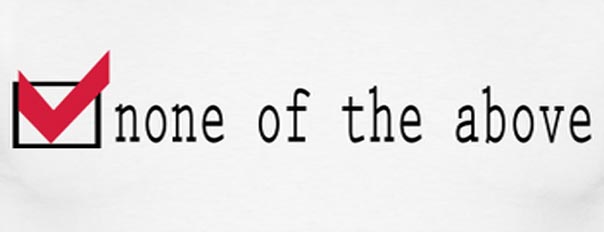
 Though many have been taught by “nuns” (the unofficial term for religious sisters*), I suggest that we can also learn from “nones” (the category of people who do not choose an official denomination).
The number of nones increases each year. According to National Geographic, in 2016, “Nones are the second largest religious group in North America and most of Europe. In the United States, nones make up almost a quarter of the population. In the past decade, U.S. nones have overtaken Catholics, mainline protestants [sic], and all followers of non-Christian faiths.” (Christianity is still the largest group in the U.S., but not all faithful church-goers believe every word of dogma and tradition.)
These facts can cause anxiety and bewilderment for some religious people and groups, but I believe they offer us opportunities — such as those implied in a recent statement by the Presbyterian Church (USA). Following its strong “Affirmation of Creation,” they write:
“Among the reasons given by teens and young adults for their dissociation from churches were that ‘churches are out of step with the scientific world we live in’ (29%) and ‘Christianity is anti-science’ (25%).” While affirming science, the statement does not hide from this fact: “Yet these same scientific discoveries also challenge traditional ways of thinking about God, God’s creation, and God’s creative activity.”
 The statement continues: “In 1947 the Jesuit paleontologist Pierre Teilhard de Chardin described this challenge. When we speak of a ‘theology of modern science,’ it obviously does not mean that by itself science can determine an image of God and a religion. But what it does mean, if I am not mistaken, is that, given a certain development in science, certain representations of God and certain forms of worship are ruled out, as not being homogeneous with the dimensions of the universe known to our experience. (Emphasis in the original).”
I started this ecospiritualityreources website (cf my Home page) largely because “What people seemed to appreciate was help in understanding the evolving worldview coming from new science and new theology so they could better integrate their beliefs into that worldview.” I myself had suffered from lack of help when my increasing scientific knowledge bumped roughly against items of dogma and tradition. Further, as a Sister of the Holy Child Jesus, I am pledged “to help others to believe that God lives and acts in them and in our world” — and that cannot be done without a constantly deepening understanding of the Mystery we call God within the world and worldview in which we live.
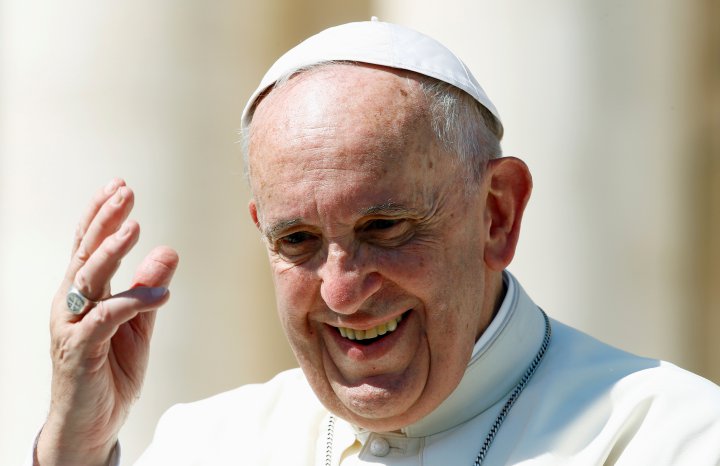 Pope Francis, speaking about the death penalty at a recent Vatican conference celebrating the 25th anniversary of the Catechism of the Catholic Church, clearly emphasized that “Tradition is a living reality”: “Only a partial vision can think of ‘the deposit of faith’ as something static. One cannot conserve the doctrine without making it progress, nor can one bind it to a rigid and immutable reading without humiliating the Holy Spirit.”
Michel Castro, Professor of Fundamental Theology in the Theology Faculty of Lille University, notes that “since the very beginning of Christianity, the faith has been expressed anew according to new cultures, and new questions, sensitivities, and realities. A tradition, if it is not to die, must express its convictions in the language of the time: a language that will, therefore, be new.”
Rather than being fearful of the objections and rejections coming from nones, we can use these to grow a faith consistent with the scientific signs of our time. Nones offer us the opportunity (and perhaps the obligation) to explore what we believe, especially about the God whose truth no denomination can ever fully possess.
Adhering rigidly to beliefs while refusing to discern them in the light of new developments seems to question God’s power in an evolving world and the power given to us as humans — in Pope Francis’ words: “humiliating the Holy Spirit.” It’s easy to forget that creation began billions of years ago; the drive for life is relentless; due to intrinsic interconnections, nothing can remain static because everything within which we live is ever adapting. And we need always to apply the heart of Jesus’ life and message to our times.
The Catholic Church is no stranger to such changes. Starting with what was judged correct in its time, it has considered truths not before known but now revealed, and organically grown and developed something more appropriate. The Church’s position on slavery and limbo are but two examples.
 Every word of Sacred Scripture and most religious traditions and rituals came before anyone knew that planet Earth revolved around the Sun, not to mention that creation is nearly 14 billion years old and there are billions of galaxies. We had no access to the social and biological sciences — the lack of which result in so many current “isms” and hostilities.
No one guessed that we are made of stardust. It’s still new to realize, as Thomas Berry did, that Earth is a communion of subjects rather than a collection of objects. How many times do people still look up when thinking of God, despite professing that God is everywhere? How often do we think of “people” as separate from the air they breathe and the other gifts of creation on which our lives interdepend?
From nones we can learn, if nothing else, that insisting on what belonged to another world view will not satisfy the science-aware mind. We learn from nones the urgency of adapting, growing, altering clothing that no longer fits in order to accomodate a growing body. We can learn to trust the Spirit acting in us and in the world of our time.
Among recent books that “separates faith from fiction and makes sense of belief,” I recommend It’s Not Necessarily So (Caritas, 2016) by Fr. Richard G. Rento (long-time friend of the SHCJ). Cf my review (and other suggestions) in https://ecospiritualityresources.com/books-sites-videos/.
Please share your relevant personal experiences and recommended books in Comments.
* A “nun” is a religious woman who lives a contemplative and cloistered life of meditation and prayer, while a “religious sister” lives an active vocation of both prayer and service, often to the needy, ill, poor, and uneducated.




 ecospirituality resources