Although tree leaves are dropping only in the cool Northern Hemisphere, November is an appropriate month for the whole world to reflect on life and death. The following can be used in any location. For a two-sided pdf, contact terrishcj@aolcom.
 Preparation
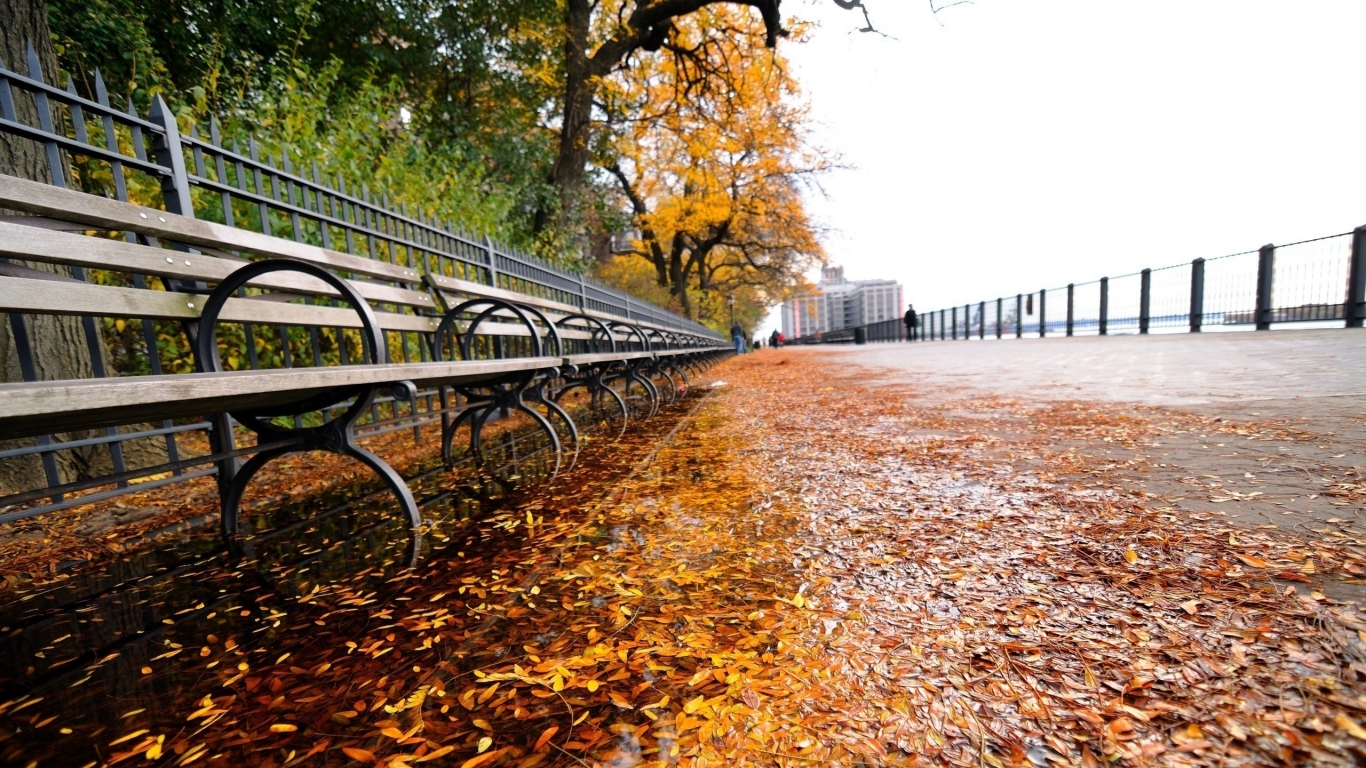
Each participant needs a leaf — one that is losing its green chlorophyll and showing other colors of yellow, orange, or red, or one already crisply brown, is elements breaking down, returning nutrients back into the soil for the next generation of leaves. Others can use a green leaf, remembering that it, too, is terminal.
Reflection
Reader 1: We gather in November to remember our beloved deceased relatives and friends. (Participants name deceased.) Reader 2: We also remember our family ancestors, ancestors in our faith, and those connected by shared values over the years and centuries. (Participants name those they wish to rememberer.) Reader 3: Trees, bushes and plants are experiencing their annual cycle of hibernation because our beloved planet, journeying around our Star, experiences shorter days and colder weather. Reader 4: But everything and everyone ever in existence in the past has transformed, evolved, lived and died. We share this trajectory, for we are part of the awesome process of evolution. Everything has its time.
Reader 5: A reading from Ecclesiastes 3: To everything there is a season, and a time to every purpose under heaven: A time to be born, and a time to die; a time to plant, and a time to pluck up that which is planted ….
Sing:
Turn, Turn, Turn (YouTube, Judy Collins BBC 4:35: www.youtube.com/watch?v=SHvMBjCH46Q) Sing along as you wish.
To everything, Turn, turn, turn,
There is a season, Turn, turn, turn,
And a time to every purpose under heaven.
Leader: Look closely at your leaf. Note the range of hues, even within one color. Note the lines and contours. Of all  the leaves ever in existence, this one is unique! Consider the chemical activity from its first moment of existence from stardust to the present, its months of contributing to the life of its tree, to its bioregion, and ultimately to the entire planet. Marvel that, thanks to eons of evolution, its tree developed a thin bumpy line of cells where the leaf stem met the branch. When the stem was ready, bit by bit it pushed the leaf away from the stem and sealed that spot to protect itself for the winter. If the leaf did not drop, it would be a useless permanent appendage, preventing the tree from creating new leaves the following spring. This leaf has begun its demise, and will soon crumble to dust. But first, here it is, helping us deepen our awe for creation and the wonder of the cycles of life.
Quiet reflection
Share anything you wish from your leaf reflection including any connections you made between your leaf and your deceased loved ones and your self.
Sing:
Just to Be Is a Blessing, chorus only, as many times as group wishes: (If needed, YouTube, Colleen Fulmer, first 55 seconds: www.youtube.com/watch?v=aaAWvshg6xw)
Just to be is a blessing, Just to live is holy; Just to be, just to live, Is a blessing, is holy.
All: Let us be grateful for the gift of our own life/ for being part of the life and death of creation/ for being so closely interconnected with all life/ that we actually “interbe.”/ Let us be grateful for all those we know and love/ living and dead/ for those who inspire us/ and help us experience love/ for the awareness that some day/ we too shall die./ Let us rejoice in the divine presence/ living and acting in us and in our world./ How blessed and holy are our lives!
Leaders: Go in peace, to love, treasure, and care for all life.
All: Yes, gratefully!



 the stars are not so much above
 ecospirituality resources